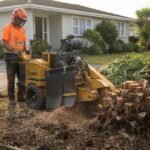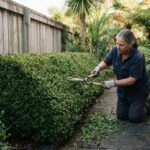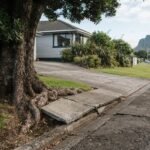
Public trees are pruned to manage risks to people and property and support tree health, not simply to make them look smaller. Tauranga City Council carries out tree canopy thinning in Tauranga when needed, with routine street-tree pruning taking place on average every five years. The work can address branches obstructing footpaths, roads, powerlines, street lighting or traffic signs.
It’s understandable to wonder why a healthy-looking tree needs pruning, or why a council crew can’t simply cut it back more heavily. The aim is to manage practical risks while helping trees remain healthy, rather than removing more growth than necessary.
This article explains why Tauranga City Council prunes public trees, what canopy thinning can and can’t address, and how pruning differs from topping. You’ll also learn when a public tree may be removed and where professional tree pruning and canopy care can help with trees on private property.
Key Takeaways
- Learn why topping is different from careful canopy pruning, and how heavy cutting can affect a tree’s future growth and condition.
- See what factors can make removal more appropriate than further pruning, including a tree’s condition and effects on traffic or infrastructure.
- Understand why requests about shade, views or fallen leaves don’t necessarily justify pruning or removing a public tree.
- Find out what to consider before arranging work on a tree, and when professional pruning or canopy care may help.
Pruning to manage risk and maintain tree health
Tauranga City Council monitors urban trees and prunes public trees when needed. This work manages risks to people and property while supporting tree health and longevity.
Choosing a qualified arborist
Choose an arborist who can explain each proposed cut, its purpose and how the work will protect the tree’s structure. A clear plan matters around homes, footpaths and powerlines, where poor cuts can create new problems. Ask how branches near these areas will be managed and how green waste will be handled. A sound explanation should link the tree’s condition to the recommended work.
Canopy thinning and other pruning methods
Canopy thinning removes selected branches within the crown, while crown reduction shortens branches to make the overall crown smaller. Crown lifting removes lower branches to raise the canopy. Each method addresses different needs, so the planned cuts should match the concern, such as clearance over a footpath or a crowded crown. Tauranga City Council does not practise or condone topping. Topping can cause weak regrowth, decay, safety issues, increased maintenance and a shorter lifespan.
Standards for thinning mature trees
For a mature tree, a careful approach uses selective cuts that retain its natural shape and useful crown structure. Avoid topping or removing growth without a clear purpose, as heavy cuts can leave weak regrowth and decay. Before work starts, agree which branches need attention and why. This keeps the plan focused on a specific concern, such as an obstruction, rather than simply making the tree smaller.
Timing canopy thinning in Tauranga
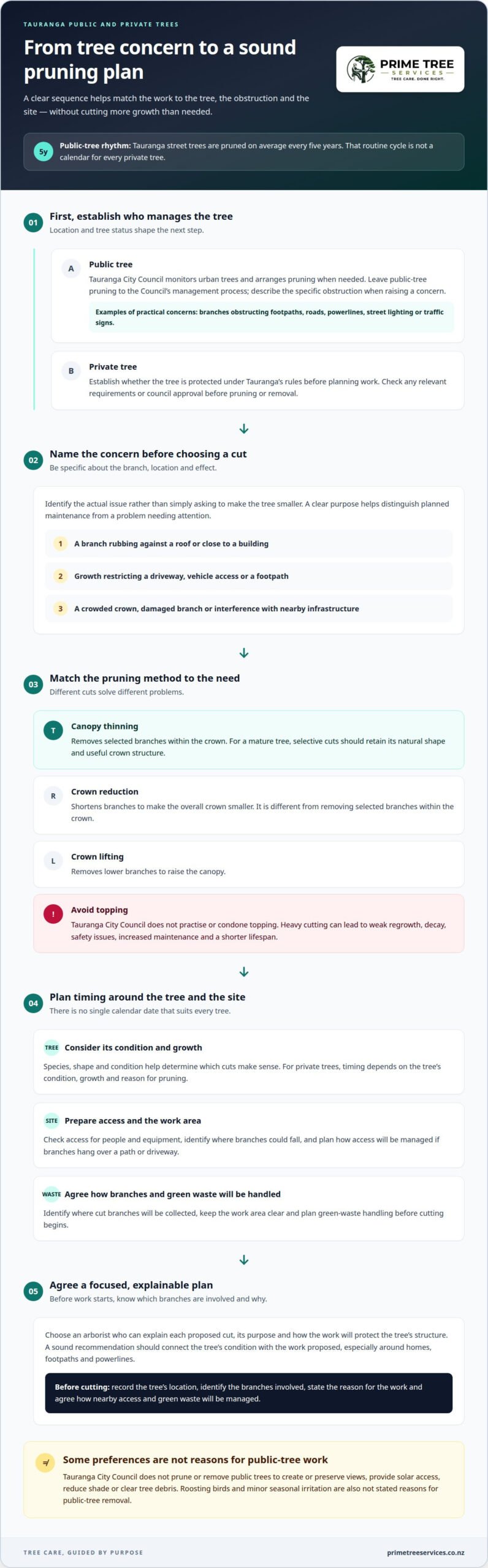
Tauranga street trees are pruned, on average, every five years, but that public-tree cycle isn’t a calendar for every private tree. Timing depends on the tree’s condition, growth and the reason for pruning. Before work, identify access routes, nearby footpaths and where cut branches will be collected. Keep the work area clear, and plan green-waste handling before cutting begins. If the job also involves boundary hedges, Tauranga hedge removal may be relevant.
When is the best time to thin tree canopies in Tauranga?
In Tauranga, the right time depends on the tree’s condition and the reason for pruning, not a single calendar date. Start by identifying the issue: a branch rubbing against a roof, restricting a driveway or crowding the crown. This gives the work a clear purpose and helps distinguish planned maintenance from a problem needing prompt attention.
The season alone doesn’t show whether a tree needs thinning. Look at its growth and surroundings instead. Note whether branches block a path, touch nearby structures or interfere with vehicle access. The tree’s species, shape and condition also affect which cuts make sense. These details help determine suitable timing and keep pruning focused.
For a tree without an immediate obstruction, plan the work around the site. Check access for people and equipment, identify where branches could fall, and choose a time when the work area can be kept clear. If branches hang over a path or driveway, consider how to manage access during pruning. These practical details matter as much as the date.
Don’t delay just to wait for a preferred season if a damaged or obstructive branch needs attention. Identify the concern and whether it affects people, property or access. Then arrange the work so branches can be removed safely and green waste collected. If the concern is only about shade or seasonal leaf fall, clarify the desired outcome before deciding whether pruning is suitable.
For public trees, Tauranga City Council monitors urban trees and schedules pruning when needed. Private trees need an assessment based on their condition and setting. Describe the issue clearly, such as a low branch over a footpath or growth close to a building. This helps define the work and its timing without relying on a blanket seasonal rule.
Do I need Tauranga City Council consent to thin or prune?
First establish whether the tree is public or private. Tauranga City Council monitors urban trees and arranges pruning of public trees when needed. Raising a concern about a street tree is different from planning work on a tree within private property. The tree’s location and status determine the next step.
For a public tree, leave pruning to the Council’s management process. Pruning can address practical issues such as branches obstructing paths, roads or nearby infrastructure. A branch affecting visibility at a road junction, for example, is a different concern from leaves falling into a garden. Describe the obstruction clearly when raising a public-tree concern.
For a private tree, don’t assume that being on your property settles every consent question. First establish whether the tree is protected under Tauranga’s rules, then identify whether the proposed work is selective thinning, crown reduction or removal. These are different interventions. Shortening a whole crown, for instance, isn’t the same as removing selected branches.
Before work starts, write down the tree’s location, the branches involved and the reason for cutting. Be specific: for example, identify a limb obstructing access rather than simply asking to make the tree smaller. If protection status or council approval applies, establish the relevant requirements before pruning. This keeps the work aligned with the tree’s status and intended outcome.
Purpose matters for public trees. Tauranga City Council doesn’t prune them to create or preserve property views, provide solar access, reduce shade or clear tree debris. It also won’t remove a public tree for those reasons, or to address roosting birds or minor seasonal irritation. A request based only on a blocked view, for example, doesn’t meet the stated reasons for public-tree work.
Treat public and private trees as separate consent questions. For public trees, raise the specific obstruction with Tauranga City Council rather than arranging pruning yourself. For a private tree, identify its protection status and the proposed cuts before work begins. This distinction helps prevent a routine-looking trim from overlooking the tree’s status or the rules that apply.
Which rules apply to protected trees and vegetation in Tauranga?
For public trees, Tauranga City Council’s decisions depend on the tree’s condition, risks and effects on surrounding infrastructure. A request based only on shade, views or leaf litter doesn’t establish a reason for pruning or removal. Separate those preferences from safety, traffic or infrastructure concerns when describing an issue with a tree.
The Council may remove a public tree that is dead, dying or dangerous to people or property. It may also remove a tree that is dead or incurably declining, or when pruning can’t resolve a traffic or visibility issue. Other grounds include preserving other trees, a qualified arborist’s assessment that removal is needed, or damage to infrastructure.
For example, a tree affecting sightlines may be considered for removal if pruning can’t address the problem. A tree damaging infrastructure may also meet a removal criterion. By contrast, opening a view, gaining solar access or reducing shade isn’t a stated reason for removal. The distinction is the tree’s condition or practical effects, not simply a preferred garden outcome.
Tauranga City Council also won’t remove a public tree to reduce tree debris, address roosting birds, or respond to seasonal or minor allergenic or irritant reactions. It won’t act on unfounded property-damage claims. The Council likewise doesn’t prune public trees to create or preserve views, provide solar access or accommodate property development. These limits distinguish public-tree management from private preferences.
If a public tree appears dangerous, is declining, affects visibility or damages infrastructure, describe the specific concern and location when raising it with Tauranga City Council. For private trees, don’t assume these public-tree criteria determine whether a tree is protected or what work is allowed. Establish the tree’s status and applicable requirements before arranging pruning or removal. Distinguishing public from private trees helps you take the right next step.
Prime Tree Services: Tree Removal & Felling
Prime Tree Services can help when a private tree needs careful pruning or removal. If the tree is healthy but selected branches need attention, Tree Pruning & Canopy Care can address the canopy without treating removal as the default. Where a tree is dead, declining or creating a serious obstruction, Tree Removal & Felling may be more suitable.
The right work depends on the tree’s condition, position and the concern you’re trying to resolve. Sharing those details helps clarify whether pruning or removal suits the job. For a tree on public land, raise the matter with Tauranga City Council, as public-tree decisions sit with the Council.
Contact Prime Tree Services or visit primetreeservices.co.nz to discuss your tree.
Plan the next step for your trees
Before arranging pruning, write down what needs to change around the tree. Note the branches or access points involved, the result you want and any limits around the property. This gives the work a practical starting point instead of leaving the goal open to interpretation.
A clear brief for tree canopy thinning in Tauranga helps match the work to your property’s needs. Prime Tree Services offers Tree Pruning & Canopy Care for canopy work, Tree Removal & Felling when removal is needed, and Hedge Cutting & Shaping for boundary greenery. Describe the outcome you’re aiming for so the proposed work has a clear purpose.
You could also note nearby buildings, paths or garden features that need care during the job. A few useful details make it easier to discuss an approach suited to your outdoor space.
With a clear plan, you can take the next step with confidence and create a tidier, well-managed outdoor space.
Frequently Asked Questions
What does tree canopy thinning involve in Tauranga?
In Tauranga, canopy thinning involves selectively removing chosen branches within a tree’s crown while retaining its overall form. The work should have a clear purpose, such as addressing crowded growth, rather than simply making the tree smaller. Before pruning, identify which branches need attention and the intended result. This keeps cuts targeted and helps avoid an unnecessarily sparse or uneven canopy.
What risks come from over-thinning a tree canopy?
Over-thinning can leave a tree’s crown sparse or uneven, while heavy cutting may cross into topping. Topping can lead to weak regrowth, decay, safety issues, increased maintenance and a shorter lifespan. Tauranga City Council doesn’t practise or condone it. Keep the proposed work focused on selected branches, and avoid removing large sections just to change the tree’s size or appearance.