A freshly cut stump can look harmless until it catches a mower blade, blocks a new garden bed, or becomes the one obstacle everyone has to walk around. Stump grinding below ground level removes the visible stump and takes the remaining wood down far enough that the area can be covered, leveled, and put back to use.
The right depth is not the same for every property. A stump in the middle of a lawn has different requirements from one beside a driveway, fence, retaining wall, or future planting area. A proper assessment looks at the stump, roots, access, nearby structures, and your plans for the space before the machine starts.
What does grinding below ground level mean?
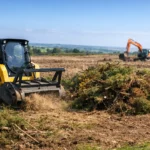
Stump grinding uses a purpose-built machine with a cutting wheel to gradually chip away the stump. Rather than pulling the full root ball from the ground, the grinder reduces the stump to wood chips and takes the main stump section below the surrounding soil level.
For many residential jobs, grinding roughly 4 to 6 inches below ground level provides enough clearance to add topsoil and establish lawn. Where a customer is preparing for paving, a garden feature, a driveway edge, or new planting, a deeper grind may be more suitable. The usable depth depends on the job, because there is no value in grinding unnecessarily deep if the surrounding roots or site conditions make it impractical.
The result is a smoother, safer area without the disruption of excavating a large root ball. It is often the most practical way to deal with a stump after tree removal.
Why depth matters after stump removal
A stump cut flush with the lawn may look tidy for a while, but it is still solid timber just below the surface. Grass struggles to establish over it, mower blades can strike it, and the ground may settle unevenly as the timber breaks down over time.
Grinding below the finished surface gives room for soil and allows the area to be restored properly. This is especially useful where the stump sits in a regularly used lawn, close to a path, beside a garden boundary, or in an outdoor area where children and visitors walk.
A below-ground grind also makes future maintenance easier. You are not trimming around a stump, avoiding it while mowing, or explaining to tenants why there is a hard lump in the middle of the section. It is a straightforward improvement that makes the property easier to manage.
How deep should a stump be ground?
The best answer is based on what you want to do next. For lawn restoration, a standard below-ground grind is usually enough to create a level surface once the grindings are managed and good soil is added. The aim is not simply to make the stump disappear from view. It is to leave enough depth for soil, seed, or turf to establish above the remaining timber.
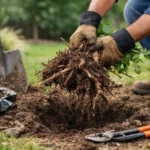
If you are creating a garden bed, the grinder may need to go lower so roots and planting soil have more room. Keep in mind that large structural roots can extend well beyond the original stump. Grinding removes the central stump and accessible surface roots, but it does not always mean every root is removed from the property.
For hard surfaces, more planning is needed. A stump close to a proposed patio, paving area, shed pad, or driveway should be assessed with the finished levels and construction method in mind. In some cases, stump grinding is still the right approach. In others, excavation or a different preparation method may be recommended to avoid settlement later.
Stump grinding versus full stump and root removal
Stump grinding is usually less disruptive than digging out the entire stump and root system. Full removal can require an excavator, more access, and significant disturbance to lawn, gardens, edging, irrigation, or nearby surfaces. On tight residential sites, that disruption can quickly outweigh the benefit.
Grinding is a practical choice when the goal is to reclaim the surface area, reduce a trip hazard, and prepare the ground for lawn or light planting. It is also useful in confined spaces where a compact grinder can be brought in without tearing up the property.
Full removal may be worth considering when major excavation or building work is planned directly over the stump area. The condition of the tree, stump size, root spread, soil, slope, and access all affect that decision. Good advice should be based on the actual site, not a one-size-fits-all promise.
What happens to the wood chips?
Grinding produces a mix of wood chips and soil. These grindings can be useful in some parts of a property, but they are not always the best material to leave in the hole if you want a clean lawn finish. Fresh wood chips settle as they decompose and can leave the ground low over time.
For lawn areas, the usual approach is to remove or redistribute excess grindings, backfill the hole with quality topsoil, and leave the surface ready for seed or turf. Some settling can still occur, particularly after rain or as deeper wood breaks down, so a small top-up of soil later may be needed.
In garden areas, wood chips can be used as mulch if they are kept on the surface rather than mixed deeply into the soil. Whether the grindings stay or go should be discussed before work begins, along with green-waste removal and the level of finish you want.
Site conditions can change the method
A stump grinder is powerful equipment, but it is not a machine to run blindly across a section. Property protection begins with planning the route in, checking for obstacles, and considering where chips will travel during grinding.
Difficult access is common around Tauranga homes and lifestyle blocks. Narrow side gates, sloping ground, established gardens, retaining walls, and soft lawn can all affect the size of machine that can be used and the time required. A capable crew will select a method that suits the access rather than forcing large equipment through a space where it does not belong.
Overhead services, underground utilities, irrigation lines, drainage, and nearby fences also need attention. Tree roots can grow close to structures and services, and the grinder must be operated with control around anything that could be damaged. If a stump is beside a fence post, concrete edging, or a building, it may not be possible or sensible to grind every last piece of wood right up against it.
When is the best time to grind a stump?
A stump can be ground soon after a tree is removed, and doing both jobs together often keeps the work area organized and avoids a second visit. Fresh stumps are generally straightforward to identify and access, while old stumps may be harder, drier, partly buried, or surrounded by regrowth.
Wet ground can affect access, particularly on lawns and slopes. However, the right timing depends on the site rather than the calendar alone. If machinery is likely to mark soft ground, it may be better to wait for firmer conditions or use a smaller machine and a more careful access plan.
A clean finish starts with a clear plan
Before booking stump grinding, think about the finished result you want. Are you restoring lawn, planting a hedge, creating a garden bed, or preparing for a future project? That information helps determine the grinding depth, chip management, and whether additional root work is needed.
Prime Tree Services assesses each stump individually and provides practical recommendations based on access, terrain, surrounding structures, and the intended use of the area. The work should include controlled grinding, sensible protection for the property, and a tidy cleanup of the agreed area.
A stump does not need to remain the awkward reminder of a tree that is gone. With the right depth, cleanup, and soil preparation, that patch of ground can become lawn, planting space, or simply one less job on the property maintenance list.