Remove dead or yellowing palm fronds carefully, keeping cuts clear of the main stem. For palm tree trimming in Tauranga, start by inspecting the crown for changes and signs of pests or disease.
Older fronds can make a palm look untidy, but not every yellow leaf is simply a clean-up task. A closer inspection can help distinguish an ageing frond from signs of a wider problem. Look for scale insects, mealybugs and possible fungal infections.
This guide explains what to look for during an inspection, when dead or yellowing fronds may need removing, and why cutting into the main stem can harm the palm. You’ll also learn when the height, condition or position of a palm makes professional pruning and canopy care the safer, more practical next step.
Key Takeaways
- Learn how to spot fronds that may need removing and why cuts should stay clear of the palm’s main stem.
- Understand the local considerations that can affect whether palm trimming needs council input.
- See what to look for when choosing an arborist for palm work, including how the tree’s condition and setting shape the job.
- Recognise when careful pruning may be enough and when a palm’s condition or position points towards removal instead.
2. Removing dead or yellowing fronds
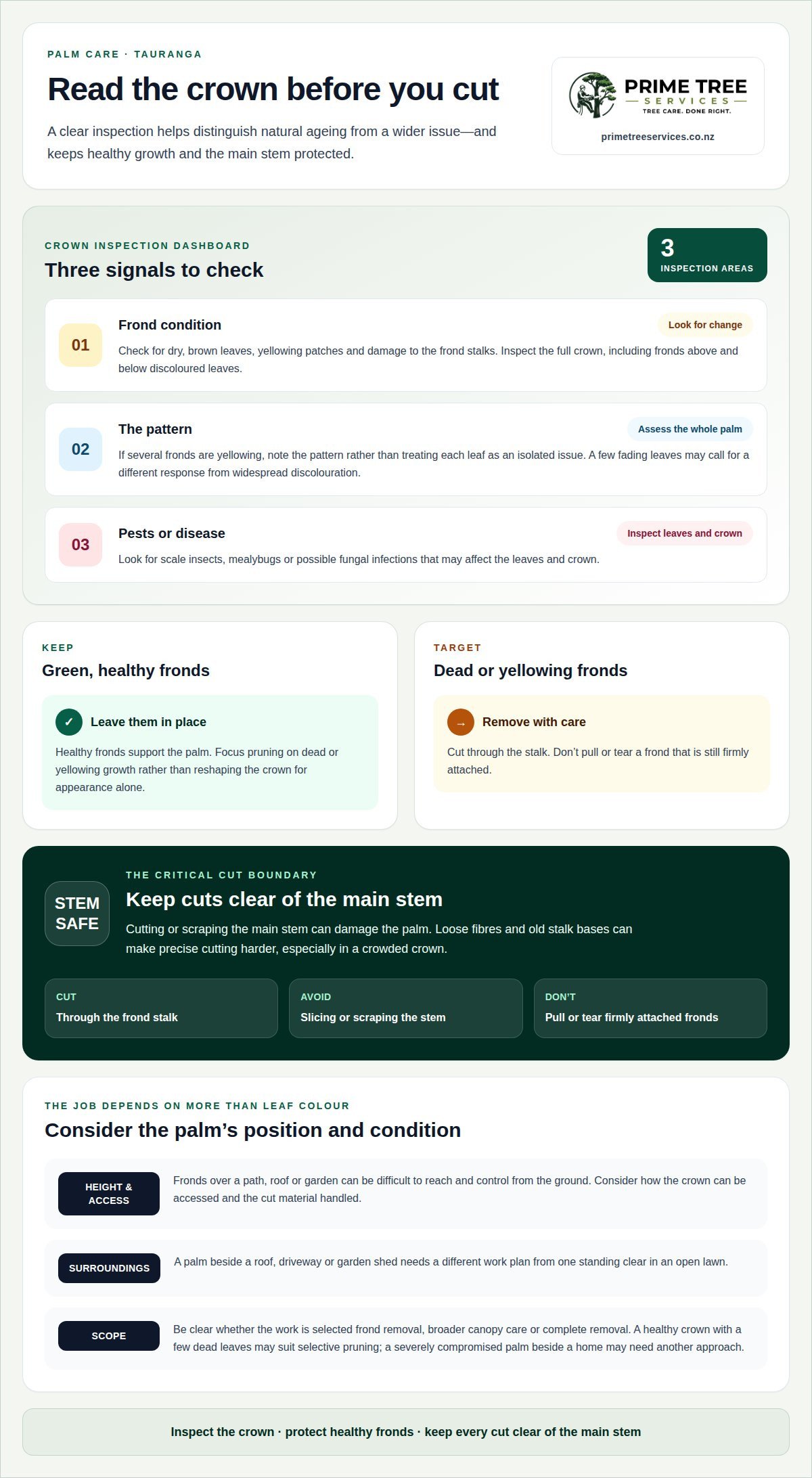
Remove dead or yellowing palm fronds with care, leaving the main stem untouched. Palm tree trimming in Tauranga should begin with a full-crown inspection, including the fronds above and below any discoloured leaves. This helps distinguish natural ageing from a broader change affecting the palm.
Look for dry, brown leaves, yellowing patches and damage to the frond stalks. Check for scale insects, mealybugs or possible fungal infection, which can affect the leaves and crown. If several fronds are yellowing, note the pattern rather than treating each leaf as an isolated issue. Regular inspections make changes easier to notice.
When removing a frond, work carefully around the trunk. Cut through the stalk without slicing or scraping the main stem, which can be damaged by an uncareful cut. Don’t pull or tear a frond that is still firmly attached. Loose fibres and old stalk bases can make precise cutting more difficult, especially in a crowded crown.
Leave green, healthy fronds in place unless there is a clear reason to remove them. They support the palm, so focus pruning on dead or yellowing growth rather than reshaping the crown for appearance alone. A palm with a few fading leaves may need a different response from one with widespread discolouration or visible pests.
Height and access matter too. A frond hanging over a path, roof or garden can be difficult to reach and control from the ground. For palm tree trimming in Tauranga, the tree’s condition and position help determine whether pruning is suitable or removal is needed. If a wider garden clear-out also involves overgrown boundaries, hedge removal in Tauranga may be part of the work. Keep cuts clear of the main stem, and treat changing leaf colour as a reason to inspect the crown closely.
3. Tauranga council rules or permits for trimming palm trees
There’s no council permit rule supplied here that can safely be applied to every palm in Tauranga. The answer depends on the tree’s location and status, so identify both before arranging work. A palm in a private garden raises different questions from one beside a footpath or on council land.
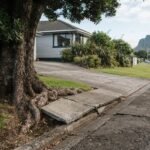
First establish who owns or manages the land where the palm grows. If it is on a road reserve, berm or public space, don’t treat it as a private garden tree. Contact Tauranga City Council about any approval needed before trimming or removal. For a palm within a property boundary, find out whether planning protections apply to that tree or site.
Be specific when making an enquiry. Provide the property address, describe the palm’s location, and explain whether the work involves removing fronds, reducing the crown or taking down the whole tree. These are different jobs, and the proposed scope helps clarify which council rules may apply. If the palm is near a boundary, establish its exact position first.
Keep any council response or approval with the job details, and make sure the work follows what was discussed. Approval for pruning does not automatically mean approval for removal. If the palm’s status is uncertain, pause before cutting rather than assuming its size or a neighbour’s experience proves that no approval is needed.
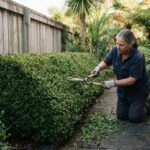
This check is separate from managing practical risks around a home. A palm beside a roof, driveway or overhead access may need careful planning even where council approval isn’t the issue. For a hedge bordering the same area, hedge trimming and pruning is a separate job from palm work. Clear information about the property, tree position and planned cuts helps keep the next step grounded in the actual Tauranga site.
After planting, young palms need regular watering while they establish a strong root system. Deep, infrequent watering encourages deeper root growth, but overwatering can lead to root rot. Plant palms in well-draining soil to help prevent waterlogging and root rot.
Established palms may need less frequent watering than young ones, with the timing adjusted to soil moisture. Inspect palms regularly for pests and diseases, including scale insects, mealybugs and fungal infections.
4. How to choose a qualified palm tree arborist in Tauranga
A proper palm assessment considers the whole tree, not just the fronds visible from the ground. An arborist should assess the crown, trunk, access and surroundings before recommending pruning or removal. A palm beside a roof, driveway or garden shed needs a different work plan from one standing clear in an open lawn.
Look for a clear explanation of the proposed work. The assessment should distinguish removing dead fronds from cutting healthy growth or reducing the crown. It should also explain how the plan protects the main stem and manages falling fronds. If several leaves are yellowing, the inspection should consider that pattern rather than treating every frond as routine work.
Access matters. A narrow side passage, uneven ground or nearby fence can affect how workers reach the crown and handle cut material. A practical plan accounts for these obstacles before work starts, as well as people, vehicles and outdoor areas that could be affected while fronds are handled.
Clear communication matters too. The scope should say whether the work covers selected fronds, broader canopy care or complete removal. It should explain what happens to the cut material and identify any limits caused by the palm’s condition or position. These details help ensure a pruning request does not turn into a different job without discussion.
Ask why a particular approach is recommended, not just what the result will be. A healthy crown with a few dead leaves may suit selective pruning; a severely compromised palm beside a home may need another approach. Choose an arborist who can explain tree-specific risks in plain language, including access, falling material and nearby structures. For a Tauranga property, a site-based explanation is more useful than a blanket claim about what every palm needs.
4. Palm tree trimming versus removal Tauranga
Trimming is suited to a palm that will remain in place but has specific growth to address, such as dead fronds affecting a path or leaves crowding a garden. The work should target that growth while keeping healthy parts of the crown intact. Removing a palm is a different decision: it means taking down the whole tree.
Start by considering the crown and trunk. A healthy crown with a few dead fronds may call for selective pruning. Widespread decline, trunk damage or a palm leaning towards a house calls for a closer assessment. Position matters too: nearby roofs, fences and access routes affect how the work can be done.
Consider how you need the space to function. If a palm blocks light over a patio, removing selected fronds may address the issue. If its trunk occupies space needed for a driveway or building work, trimming will not resolve the underlying conflict. Pruning preserves the palm and changes selected parts; removal takes down the whole tree.
Ask for the proposed scope in plain language. A trimming plan should identify which growth will be removed and how the remaining palm will look. A removal plan should clearly describe taking down the whole palm, not just cutting back its crown. This distinction helps you judge whether the recommended work addresses your concern.
For a palm beside a Tauranga home, consider its condition, position and purpose together. A sound tree with a little unwanted growth is different from one that no longer suits the site. The right choice depends on those details, not appearance alone. Access and nearby structures also affect the work involved.
For trimming, remove dead or yellowing palm fronds without cutting into the main stem. Keep the scope focused on those fronds and leave the stem untouched. This makes clear which growth the work addresses and what is outside the trimming scope.
When reviewing a plan, check that it identifies the selected fronds and does not propose cuts into the main stem. Trimming addresses specific growth while preserving the palm; removal means taking down the whole tree.
Prime Tree Services: Tree Removal & Felling
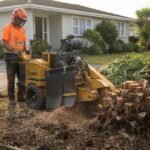
Prime Tree Services helps Tauranga property owners decide whether a palm needs pruning or complete removal. If it can remain in place, Palm & Yucca Care and Removal can include suitable tidying and pruning. If its condition or position means it needs to come down, Tree Removal & Felling addresses the whole tree.
The right option depends on the palm’s condition, surroundings and purpose on your property. A few unwanted fronds call for a different response from a palm that conflicts with a driveway or nearby structure. A clear assessment defines the work before it begins, so the plan addresses the issue you need resolved.
For help choosing the right approach for your Tauranga property, contact Prime Tree Services.
Plan the next step for your palm
Consider how you want the space to work after the palm is dealt with. Keeping it may preserve shade and greenery, while removing it can open up room for another use. That longer-term purpose can help guide palm tree trimming in Tauranga, especially if the garden or property layout is changing.
Before arranging work, decide what matters most: a clearer path, less crowding around the house or a more open garden. A defined goal makes it easier to discuss the scope and understand how the work will affect the surrounding space. Mention any future plans for nearby planting or outdoor areas so the decision takes the wider property into account.
A considered next step can make your outdoor space easier to use and prepare it for what comes next.
Frequently Asked Questions
Palm tree trimming services in Tauranga NZ?
Palm tree trimming in Tauranga is part of Prime Tree Services’ Palm & Yucca Care and Removal service. It includes tidying, dead-frond cleaning and pruning to address untidy or loose growth without removing the whole palm. If a palm is overgrown, difficult to manage or no longer wanted, the team can assess its removal. Qualified arborists work to New Zealand safety standards. The scope and cost are determined after a free site visit and provided in a written, fixed quote.
How often should palm trees be trimmed in Tauranga?
Inspect the palm regularly and remove dead or yellowing fronds, keeping cuts clear of the main stem.