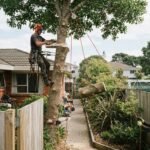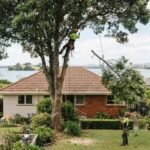
The crown reduction vs tree removal decision depends on the tree’s condition and what needs fixing. If it’s healthy but too large or interfering with nearby space, crown reduction can reduce its size while retaining its natural form. If it’s dead, severely decayed or structurally damaged beyond repair, removal may be the more suitable option.
It’s understandable to weigh the cost of reducing a tree against removing it. The work depends on the tree’s size, condition, position and site access. The right option should suit both the tree and your property.
This article explains how crown reduction works, what it means for a tree’s structure and benefits, and how its costs compare with removal. You’ll also see when keeping a tree makes sense, and when taking it down may be the more practical choice.
Key Takeaways
- Match the work to the tree’s condition: reducing a healthy, overgrown canopy can keep the tree, while serious decay or damage may call for removal.
- Keeping a mature tree preserves benefits such as shade and wildlife support, while careful pruning can make its canopy less intrusive.
- Look for a reduction that maintains the tree’s natural shape; cutting back too heavily can affect its structure and regrowth.
- Compare the work involved, including tree size, condition and access, to understand why reduction and removal costs differ.
Retaining trees’ environmental and aesthetic benefits
Keeping a suitable tree can preserve shade, wildlife habitat and the familiar character of a garden. The decision depends on the tree’s condition and how its canopy affects nearby buildings, paths and outdoor spaces.
Environmental value of tree retention
Retaining a mature tree keeps living canopy in place, providing shade, supporting wildlife and helping improve air quality. In a Tauranga garden, that canopy can shelter a seating area while branches provide places for birds to feed and rest. Careful pruning can address specific conflicts without removing the whole tree, preserving these benefits while making more room around buildings or paths.
Aesthetic value of tree retention
A retained tree can add height, seasonal interest and a natural focal point to a garden. Reducing selected growth can maintain its familiar outline while opening a view, clearing space above a driveway or easing branches away from a roof. The garden can feel tidier without losing the tree. Both the tree’s shape and the surrounding landscape matter.
In New Zealand, local council planning rules and specific protections can affect work on notable trees and trees in urban areas. Before pruning or removal, check which rules apply to the property and tree. This is particularly important if the tree is identified as notable or the work could affect a protected tree.
Choose an arborist with the training and practical experience to assess tree structure and pruning needs. Ask for a clear explanation of the proposed cuts, why they suit the tree and how its shape is likely to change. For example, a plan to clear branches from a house should identify the growth to be removed, rather than simply promise a smaller canopy.
Different types of pruning address different problems. Crown thinning removes some smaller inner branches to open the canopy, letting more light reach the garden and allowing wind to pass through more easily. Deadwooding removes dead, dying or broken branches that could fall over a house or play area. Formative pruning on a young tree can address weak forks and crossing branches while cuts are small, helping establish a sound structure as it grows.
Crown reduction and how it works
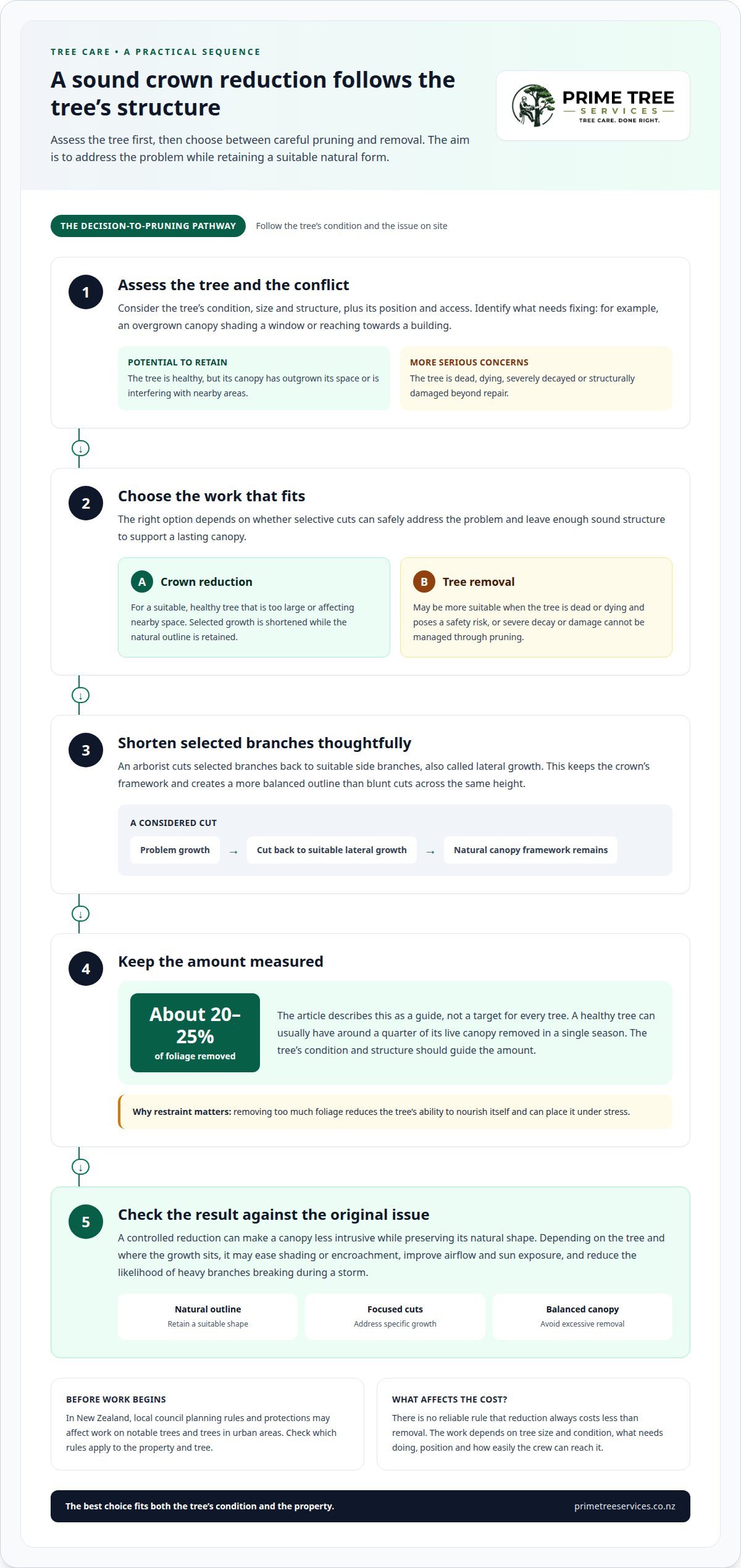
Crown reduction makes a tree smaller overall while preserving its natural shape. Rather than cutting across the crown at one height, an arborist shortens selected branches back to suitable side branches. This helps maintain the tree’s outline and leaves a more balanced canopy than blunt cuts. It can suit a healthy tree that has outgrown its space, shades a window or reaches towards a building. The aim is to reduce specific growth, not to make the tree as small as possible.
The amount removed depends on the tree’s condition and structure. Arborists typically remove about 20 or 25 percent of a tree’s foliage during crown reduction. A healthy tree can usually have around a quarter of its live canopy removed in a single season. These figures describe a guide, not a target for every tree. Removing too much foliage reduces the tree’s ability to nourish itself and places it under stress, so careful cuts matter.
Good pruning cuts are made back to suitable lateral growth, rather than leaving long stubs or cutting where no suitable branch can continue the growth. The remaining branches maintain the canopy’s natural framework and help the tree retain its shape as it grows. Removing selected weight may also reduce the likelihood of heavy branches breaking during a storm.
By reducing crowded or overextended growth, the work can ease shading and encroachment on a nearby building. Opening space within the canopy can also improve airflow and sun exposure, which may help prevent disease from taking hold. The final shape depends on the tree’s existing form and where the problem growth sits. A tree reduction service focuses on controlled cuts that preserve a suitable outline. If you’re weighing up the right approach for a tree on your property, discuss the tree and its position.
Crown reduction and tree structure
A tree’s crown is its network of branches and foliage, so pruning changes more than its outline. A considered reduction removes selected growth while maintaining the crown’s structure. That matters because the remaining branches still need to support foliage and form a balanced shape. For example, shortening one overextended limb while preserving neighbouring branches keeps the change focused on the problem area.
Heavy, indiscriminate cutting can damage a tree’s natural form. Topping removes most of the crown, leaving stumps and lateral branches instead of a natural framework. Such cuts can create decay points where new growth attaches, and large wounds may heal slowly. The tree may then be more susceptible to pests and disease. A row of blunt cuts across the top is a warning that the crown’s natural structure has been lost.
Even a well-planned reduction stresses a tree. Removing branches and foliage reduces its capacity to nourish itself, so taking too much at once can weaken it rather than solve the original problem. Cuts should also leave a balanced crown. For example, heavily reducing one side can leave the canopy uneven and change how the remaining limbs carry weight.
The tree’s condition helps determine whether pruning can address the problem. A dead or dying tree that poses a safety risk may need removal rather than further crown work. Severe disease or decay that pruning cannot manage, or significant structural damage that cannot be corrected, may also make removal necessary. In these cases, preserving the tree’s shape is no longer the priority. The key question is whether enough sound structure remains to support a lasting canopy, or whether the damage is beyond what selective cuts can address.
Crown reduction costs compared with tree removal
There’s no reliable rule that crown reduction always costs less than removal. The work depends on the tree’s size and condition, what needs doing and how easily the crew can reach it. A limited reduction may involve fewer cuts and less material to handle. A large, overgrown canopy can take more work, especially when branches are close to buildings or access is restricted.
Removal involves different work. The tree must be taken down, with its branches and trunk managed and the resulting material handled. A large tree near a house or another obstacle may need careful, staged work. A smaller tree with clear access may involve less handling. These practical differences shape the comparison, so the details of the job matter more than the service name.
A useful crown reduction vs tree removal comparison starts with the outcome you need. If you want to retain a healthy tree while reducing its reach, consider reduction. If decay or structural damage means the tree cannot remain safely, removal may be appropriate. Comparing unlike jobs, such as a light canopy reduction with removing a large tree, won’t show which option offers better value.
The cost depends on the site and work required. Prime Tree Services determines pricing after a free site visit and provides a written, fixed quote. Factors include the tree’s size and condition, its position, access, the amount of pruning or dismantling, and the material to be handled. A useful quote explains how these details shape the work, making the comparison more meaningful than assuming one option is always cheaper.
In New Zealand, whether council consent is needed depends on the tree and the rules that apply to its location. Protections for notable trees or local planning controls can affect pruning and removal, so check the relevant council requirements before work begins.
To compare crown reduction vs tree removal, consider the outcome you want, the tree’s condition, site access and whether it can remain safely. These points provide a practical basis for deciding whether to retain the tree or clear the space.
Prime Tree Services: Tree Removal & Felling
Prime Tree Services can help you decide whether to retain a tree or remove one that cannot remain safely. Its Tree Reduction Service addresses overgrown canopies, while Tree Removal & Felling is for trees that need to come down. The appropriate work depends on the tree’s condition, structure and position on your Tauranga property.
If a tree still has sound structure, reduction can preserve its place in the garden while easing interference with nearby spaces. If serious damage or decay makes retention unsuitable, removal may be the practical option. Prime Tree Services also provides Tree Pruning & Canopy Care for other tree maintenance needs.
Share what’s happening with your tree and what outcome you’re after. Contact Prime Tree Services to discuss the work.
Choose the next step for your tree
When deciding between crown reduction vs tree removal, start with the outcome you want for your property. Consider whether keeping the tree matters to your plans and what needs to change around it. Knowing your priorities makes it easier to discuss practical options without losing sight of the garden you want to enjoy.
Prime Tree Services provides Tree Removal & Felling, Tree Pruning & Canopy Care, and Hedge Cutting & Shaping in Tauranga. Describe your concern, where the tree is and what you hope to achieve. Those details help frame a useful discussion about the work that suits your property.
You can contact Prime Tree Services to discuss your tree and the next step.
A considered decision can help your outdoor space work better for the years ahead.
Frequently Asked Questions
Not sure which you need?
Start by identifying the problem and noting whether the tree appears healthy. If it’s growing over a roof, blocking light or crowding a driveway, reducing selected branches may address the conflict while retaining the tree. If it’s dead, badly decayed or seriously damaged, removal may be more suitable. Make a note of the problem area before arranging an assessment.
What is crown reduction and how does it differ from tree removal?
Crown reduction reshapes a standing tree, while removal takes it down. After reduction, the tree remains part of the garden and its canopy continues to grow, so its shape and future maintenance still matter. Removal clears the space the tree occupied. Think about the outcome you want, such as keeping a leafy outlook or clearing an area completely.
When is crown reduction preferable to removing a tree?
Crown reduction can suit a healthy tree that has become too large for its space. If branches reach towards a building or the canopy shades a seating area, selective work may ease the interference without removing the whole tree. Reduction is most useful when the issue can be addressed while preserving a sound, balanced framework and the tree still fits your garden plans.
When does a tree need to be removed rather than crown-reduced?
Removal may be needed when a dead or dying tree poses a safety risk, or when serious decay cannot be managed through pruning. Major structural damage that cannot be corrected may also rule out reduction. Shortening branches, for example, won’t resolve a problem with the tree’s underlying structure. The key is whether pruning can address the issue without leaving an unsafe tree.
What are the risks and effects of crown reduction on tree health and stability?
Crown reduction stresses a tree because removing foliage reduces its capacity to nourish itself. Excessive cutting can leave a poor framework, while topping can create large wounds and decay points where regrowth attaches. A balanced set of remaining branches is important, especially if the canopy is already uneven. The aim is considered pruning, not cutting away as much growth as possible.
How do arborists assess whether a tree should be reduced or removed?
Arborists assess the tree’s condition, branch structure and the problem it creates on the property. They look for dead or broken limbs, decay, weak forks, crossing branches and damage that pruning cannot correct. They also consider whether targeted cuts can resolve the issue without compromising the remaining canopy. This assessment helps match the work to the tree and site.