The best time for hedge clearance in the Bay of Plenty depends on the hedge’s growth stage, not a fixed calendar date. Better Trees advises pruning hedges before they produce buds and avoiding hedge trimming during hot, dry weather to reduce the risk of burning new foliage. Check the hedge and the conditions on the day before deciding.
It’s easy to put trimming off until a hedge looks untidy. Regular cuts at the right time can keep growth neat without putting new foliage under unnecessary stress. How often to trim depends on the hedge’s growth rate and the shape you want to maintain.
Read on to see how timing affects plant health, what to consider when planning a trimming routine, and how to spot a hedge that needs attention. You’ll also learn what hedge clearance can involve and when professional help can make the work more manageable around your property.
Key Takeaways
- Use the hedge’s growth stage and the day’s conditions to choose a suitable time to trim, rather than relying on a fixed calendar date.
- Match the work to the hedge’s condition and the result you want, from a tidy shape to clearing overgrowth.
- Consider how trimming affects new foliage and the hedge’s overall condition before cutting back.
- Set a maintenance rhythm around how quickly the hedge grows and how much shape you want to maintain.
When is the Right Time for Hedge Trimming?
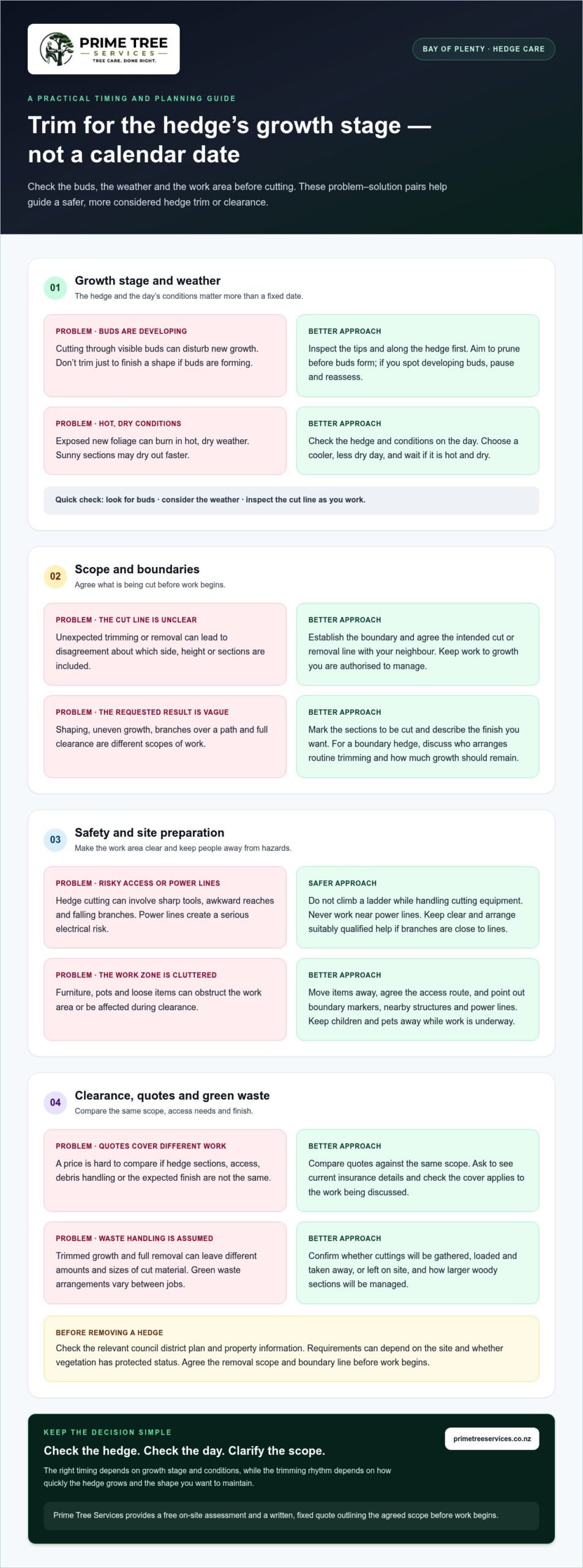
In New Zealand, the right time to trim depends on the hedge’s growth stage and the weather. Trim before buds form, and avoid hot, dry conditions that can burn new foliage. Instead of choosing a date by season, look for developing buds and pick a cooler, less dry day. This lets you time the work around the plant’s condition.
For a boundary hedge, establish where the boundary lies and agree on the intended cut line with your neighbour. Keep the work to growth you’re authorised to manage, rather than cutting across a property line or changing the hedge’s shape unilaterally. If removal is planned, agree on its scope before work begins. Clear communication helps avoid disputes about which side, height or sections are included.
Adjoining property owners should discuss who will arrange routine trimming, which parts need attention and how much growth should remain. The hedge’s position and any agreement between neighbours are practical points to settle before work starts. A clear conversation helps prevent one neighbour arranging an unexpected cut.
DIY hedge cutting can involve sharp tools, awkward reaches and falling branches. Don’t climb a ladder while handling cutting equipment, and never work near power lines. If branches are close to lines, keep clear and arrange suitably qualified help. Don’t try to move or cut them yourself. A tidy hedge isn’t worth the risk of serious injury or contact with electrical equipment.
Before hedge removal or clearance, mark the sections to be cut and move garden furniture, pots and loose items away from the work area. Let everyone at home know which access route will be used, and keep children and pets away while work is underway. Point out boundary markers, nearby structures and power lines. These steps help keep the work area clear and protect parts of the property you want left untouched.
Hedge trimming and maintenance services in the Bay of Plenty
When arranging hedge clearance in the Bay of Plenty, be clear about the work involved, access and the expected finish. Prime Tree Services provides a free on-site assessment and a written, fixed quote, so you can see the agreed scope before work begins.
Available hedge care services
Hedge maintenance can include shaping the sides and top, pruning uneven growth, or clearing branches that have spread across a path. Before requesting quotes, note the hedge’s position, access and the result you want. Compare each quote against the same scope, including which sections will be cut and how debris will be handled. Ask to see current insurance details and check that the cover applies to the work being discussed. A hedge clearance job in the Bay of Plenty may involve different access or cleanup needs from routine shaping.
Council requirements for clearance
Before removing a hedge, check the relevant council’s district plan and property information. Requirements may depend on the site and whether vegetation has protected status, so don’t assume every hedge can be removed without restrictions. Give the council the property location and a clear description of the proposed work. For a boundary hedge, agree the intended cut or removal line with the adjoining owner before work begins, helping keep the scope clear for everyone.
Clearance and green waste disposal
Hedge clearance may involve cutting back growth, collecting branches and leaving the work area clear. Green waste handling can differ between jobs, so ask the quote to state whether cuttings will be gathered, loaded and taken away, or left on site. A trimmed hedge may leave a smaller pile than full removal, which can produce larger woody sections. Confirm the disposal plan before work starts, including how those sections will be managed.
Compare quotes by checking that each describes the same hedge sections, access, debris handling and finish. This makes it easier to weigh the proposed work against your priorities and choose a scope that suits the property.
Hedge trimming and plant health
Even a healthy-looking hedge needs cuts timed around its growth stage. Check for developing buds rather than relying on a calendar date. Walk along the hedge and inspect the tips before trimming. This simple check helps you decide whether to proceed or leave new growth undisturbed.
Weather matters too. Avoid trimming in hot, dry conditions, as exposed new foliage can burn. Check the forecast and the hedge on the day, especially along sunny sections that may dry out faster. If it’s hot and dry, wait for more suitable conditions. This helps reduce stress on fresh foliage.
Focus the work on growth that needs attention. Mark uneven sides or an overgrown top, then work steadily along each section for a consistent finish. Pause to check the cut line as you go. If buds are forming, stop and reassess rather than cutting through them just to complete the shape.
- Look for buds along the hedge before choosing a trimming day.
- Check for hot, dry conditions that could expose new foliage to burning.
- Inspect the cut line as you work, and avoid cutting into developing buds.
These checks are useful for a small front-garden hedge as well as a long boundary screen. One side may receive more sun, for example, so inspect it closely before trimming. If the hedge needs substantial reshaping, consider how much growth the cut will remove and whether it can be done without cutting through visible buds. Working section by section makes it easier to pause if the conditions or growth suggest waiting.
Plant health is part of the decision, not an afterthought. Choose a suitable day, check for buds and make sure you can see the hedge’s growth clearly. If hot, dry weather could expose new foliage to burning, wait for better conditions to help keep the hedge healthy and even.
Hedge trimming frequency
There’s no single trimming interval that suits every hedge in the Bay of Plenty. Growth rate, plant type, recent weather and the finish you want all affect when it needs attention. A fast-growing hedge beside a driveway may need closer monitoring than a slower-growing screen at the back of a section.
Use visible growth to guide your routine. Look for shoots extending beyond the intended line, uneven sides, or growth narrowing a path or covering a window. If the hedge still looks tidy and access is clear, another cut may not be needed yet. Respond to the hedge’s condition rather than trimming automatically by the calendar.
A simple maintenance record can help you spot a growth pattern. After each trim, note the date, which sections grew fastest and how the hedge looked before cutting. Compare your notes at the next inspection. If the sunny side repeatedly grows beyond the desired outline first, check it more often and plan the next job around its regrowth.
Keep the intended shape in mind between trims. Small, regular corrections can maintain a defined outline, while unchecked growth may mean a larger cut later. Don’t arrange work just to keep a routine appointment if the hedge is already the shape you want. Consider the plant’s condition and the weather before trimming.
Use these cues to plan your next inspection:
- Growth: Check for shoots extending past the chosen outline.
- Access: Notice whether branches are narrowing a path or blocking a window.
- Appearance: Look for uneven sections that need reshaping.
- Records: Compare previous trim dates with the hedge’s observed regrowth.
Set your next inspection after seeing how the hedge responds to its last trim. Adjust the routine if its growth or your preferred height and shape change. For a long hedge, assess separate sections individually, since sun and shelter can affect how quickly they grow. This keeps the schedule practical and the finish easier to maintain.
Prime Tree Services: Tree Removal & Felling
Prime Tree Services can help with Hedge Cutting & Shaping, Hedge Removal Service and related tree work. If nearby trees crowd the space, its Tree Removal & Felling service may be relevant to the wider job.
Choose Hedge Cutting & Shaping when the plants can stay and need a neater outline. If a hedge or shrub needs to go, removal can open up the area and make paths or garden edges easier to use. The right scope depends on what you want to keep and what needs clearing.
Before work begins, outline the sections involved, the finish you want and how green waste should be handled. This gives the work a clear purpose and helps keep the rest of the garden in view.
Contact Prime Tree Services to discuss hedge work or related tree removal and felling.
Plan the next step for your outdoor space
For hedge clearance in the Bay of Plenty, think beyond the cut itself. Decide how you want to use the space next, whether that means opening a garden edge, clearing a view or keeping an established hedge. A clear end goal helps shape the work around your property instead of treating every overgrown area the same way.
Prime Tree Services offers Hedge Cutting & Shaping for maintained hedges, Tree Pruning & Canopy Care for surrounding trees, and Tree Removal & Felling when a tree needs to be removed. The scope can address connected growth around a section, with the work planned around the outcome you want.
Take the next step by describing the area and the change you want to make. Contact Prime Tree Services to arrange a free on-site assessment and receive a written, fixed quote.
With a clear plan, your outdoor space can move towards the finish you have in mind.
Frequently Asked Questions
What hedge trimming and clearance services are available in the Bay of Plenty?
Prime Tree Services offers Hedge Cutting & Shaping for garden borders and boundary hedges, and Hedge Removal Service when an unwanted hedge needs clearing. A homeowner in Tauranga might want to keep a hedge but bring it back from a path, while another may want it removed to open space for fencing. The right service depends on whether the plants are staying.
Do Bay of Plenty hedge contractors offer free quotes, and which areas are covered?
Prime Tree Services provides a free on-site assessment and written, fixed quote. Its service area includes Tauranga and the wider Bay of Plenty, including places such as Mount Maunganui, Papamoa, Te Puke and Katikati. When requesting an assessment, describe the hedge’s location and whether you want trimming or removal so the quote reflects the work at your property.
What is the best time of year to trim common hedges in the Bay of Plenty?
Trim before the hedge produces buds, and avoid hot, dry weather, which can burn new foliage. Hedge species and growth stages differ, so inspect the plant rather than relying on one season for every garden. If buds are developing, delay the cut. If they aren’t, choose a day that isn’t hot and dry.
Council rules for hedge height, protected trees and vegetation removal Bay of Plenty
Before removing a hedge, check the relevant council’s district plan and property information. Requirements may depend on the site and whether the vegetation has protected status.