A hedge can go from useful boundary planting to a major property problem surprisingly quickly. It may be blocking light from a living area, crowding a driveway, pushing into gutters, hiding sightlines, or becoming too large to maintain safely. The right answer is not always obvious. Hedge removal versus pruning comes down to the hedge’s condition, its location, your long-term plans for the space, and whether ongoing maintenance is realistic.
For some properties, a careful prune brings a hedge back under control and keeps the privacy or shelter it was planted for. For others, removal is the more practical choice because repeated cutting will only delay the same problem. A proper site assessment helps separate a hedge that needs skilled maintenance from one that has outgrown its purpose.
Hedge Removal Versus Pruning: The Main Difference
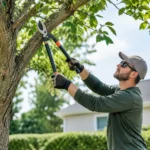
Pruning retains the hedge and manages its size, shape, density, and clearance from nearby structures. This can range from a routine trim along the sides and top to a more substantial reduction where a hedge has become tall, wide, or uneven. Done properly, pruning can improve the hedge’s appearance, bring more sunlight into the section, and make future maintenance easier.
Removal means clearing the hedge so the area can be used differently. It may be chosen when plants are declining, growing into services or structures, taking up too much of a small yard, or creating an ongoing maintenance burden. The agreed scope should be clear before work starts, especially where access is tight or the hedge runs close to fences, buildings, paving, or garden features.
The key question is not simply, “Can this hedge be cut back?” Most hedges can be cut. The better question is, “Will cutting it back provide a good result that can be maintained?”
When Pruning Is the Better Choice
Pruning is usually the sensible option when the hedge is healthy, serves a clear purpose, and still fits the property with some careful size control. A well-established hedge can provide privacy from neighboring homes, soften road noise, define boundaries, and shelter exposed outdoor areas. Removing it can leave a section feeling bare for years while replacement planting matures.
A professional prune can be especially effective when the issue is straightforward overgrowth. Perhaps the hedge is hanging over a path, closing in a patio, or becoming too high for safe home maintenance. Reducing it to a manageable height and restoring clean lines may be all that is needed.
The method matters. Taking too much off at once, cutting into unsuitable growth, or leaving a hedge wider at the top than the base can lead to thin growth, bare patches, and an uneven finish. Some hedge types tolerate hard reduction well, while others respond poorly to heavy cuts. That is why the right timing and amount of reduction should be based on the particular hedge, rather than treating every plant the same.
Pruning also makes sense where removal would create a new problem. A hedge holding a boundary line can provide useful screening between homes. On a lifestyle block, it may offer shelter from wind across a driveway or outdoor area. In these cases, controlled reduction can deliver better light and access without losing the benefits the hedge provides.
Signs Your Hedge Is Still Worth Maintaining
A hedge is often a good candidate for pruning when it has healthy growth across most of its length, a reasonably solid base, and enough room to be reshaped without constantly conflicting with buildings or access. It should also be possible to maintain it at the chosen size without turning each visit into a major job.
That last point matters. A tall hedge may look fine immediately after a major cut, but if it will need specialist access every year to stay under control, removal may eventually prove more practical. There is no benefit in choosing a cheaper short-term option if it creates an expensive, repeating problem.
When Hedge Removal Makes More Sense
Removal becomes the stronger option when a hedge has become fundamentally unsuitable for the site. This is common around smaller yards where an old boundary hedge has spread far beyond its original footprint. It can narrow paths, dominate garden beds, shade lawns, and make routine property care harder than it needs to be.
A hedge may also be removed when it is in poor condition. Large dead sections, sparse lower growth, repeated pest or disease problems, and poor structure can make restoration disappointing. Heavy pruning may reduce the bulk, but it cannot always return an aging or stressed hedge to a dense, attractive screen.
Location is another deciding factor. A hedge growing hard against a house, fence, retaining wall, roofline, or overhead service needs careful assessment. Cutting it back may provide temporary clearance, but it may continue pressing into the same area as it regrows. If there is limited space for safe access and ongoing trimming, clearing the hedge can reduce future risk and maintenance.
Removal can also be the right move when you want to reclaim the area for a lawn, parking space, garden, fence replacement, better vehicle access, or a clearer view. For landlords and property managers, simplifying a difficult boundary can make inspections, upkeep, and tenant maintenance more straightforward.
Removal Is Not Always the “Bigger” Job
It is easy to assume that removal is always excessive and pruning is always conservative. In practice, the reverse can be true. Repeated heavy pruning of an unsuitable hedge can mean ongoing cost, regular disruption, and a result that never looks quite right. A planned removal may be the cleaner, more honest solution.
That does not mean every overgrown hedge should go. Once a mature screen is removed, privacy and shelter can change immediately. The decision should consider what the hedge currently contributes, what will replace it if anything, and whether the open space will genuinely improve the property.
What a Proper Assessment Should Consider
Large and awkward hedges are not a one-size-fits-all job. Before choosing pruning or removal, the site should be assessed for practical conditions that affect both the method and the result. This includes hedge height and width, plant condition, surrounding buildings, fencing, ground slope, access for equipment, and nearby overhead services.
Access often has a bigger effect on the job than homeowners expect. A hedge at the front of an open section may be relatively straightforward. The same hedge behind a narrow home, above a retaining wall, or beside a pool, shed, or neighboring property requires more controlled work. Branches and cut material need to be handled safely so the job does not create damage or unnecessary mess.
Green-waste volume is another consideration. A significant reduction or full removal can produce far more material than a standard garden bin can handle. Arranging chipping and removal as part of the work keeps the site usable and avoids leaving piles of cut material in the driveway or lawn.
A clear written quote should set out the agreed work, including the level of reduction or removal, waste handling, and cleanup. This prevents confusion between a light trim, a major cutback, and a full clearance job.
Avoid These Common Hedge Decisions
The most common mistake is waiting until a hedge becomes an urgent problem. When it is already blocking access, touching structures, or too tall to safely manage from the ground, the available options can become more limited. Regular attention usually allows for gentler pruning and a better-looking result.
Another mistake is cutting a large amount from every side without considering how the hedge will respond. The immediate result may look tidy, but the hedge can struggle if the reduction is too severe or poorly timed. A careful plan protects the parts worth keeping and targets the growth that is causing the issue.
Finally, do not choose removal solely because a hedge looks untidy after years without care. In many cases, a thoughtful reduction and reshape can make a neglected boundary feel like part of the property again. Equally, do not keep a hedge just because it has been there a long time if it is making the site darker, tighter, and harder to maintain.
Choosing the Right Result for Your Property
The best outcome is usually the one that makes the property safer, cleaner, and easier to live with over the long term. Pruning is often right when a healthy hedge still earns its place through privacy, shelter, or boundary definition. Removal is often right when the hedge is failing, crowding the site, or demanding more maintenance than the property can reasonably support.
Prime Tree Services assesses each hedge on its own condition and surroundings, then recommends a practical approach that suits the site. Whether the work calls for a controlled reduction or a full clearance, careful planning, property protection, waste removal, and a tidy finish make a real difference.
If you are unsure which direction to take, start by looking beyond how the hedge appears this week. Think about the light, access, maintenance, and usable space you want from the property in the years ahead.