Cutting a large yucca down is often only the first part of removing it. Knowing how to remove a large yucca plant means dealing with the stump and roots too, because root pieces left in the soil can send up new shoots. A professional may cut the main trunk to about 31 cm above ground, then treat or remove the stump.
If you’ve cut a large yucca back and it’s still growing, you’re not alone. Yuccas can be stubborn, and removing the remaining roots without disturbing nearby garden areas takes care.
This guide explains why yuccas regrow, how professionals handle cutting and stump removal, and why chemical control is a last resort. You’ll also learn what can affect the approach, so you can understand what’s involved before arranging large yucca removal in Tauranga.
Key Takeaways
- Sharp, rigid yucca leaves make careful handling and controlled removal important during the cut.
- Applying treatment to a cut trunk targets the plant differently from spraying its tough foliage.
- Chemical control is a last resort, and follow-up checks help catch new shoots before they spread.
- Understanding the depth and spread of the root system helps explain why removing the visible plant may not be enough.
How professionals cut a yucca plant down to the stump
Professionals use an axe or saw to cut the yucca, with gloves and protective clothing to guard against its sharp, needle-like leaf tips. Whether the clippings can go into green waste or compost depends on the receiving facility; professionals remove them for appropriate disposal rather than leaving them where seeds may spread.
- Assess the plant and work area. A professional identifies the main trunk, checks how the leaves and cut sections can be controlled, and considers nearby garden features. This helps plan a safe sequence, particularly when a large crown makes access to the trunk awkward.
- Protect against sharp foliage. Yucca leaves have pointed tips that can cause painful pricks, so gloves and protective clothing are recommended. The professional manages the foliage carefully, keeping sharp leaves away from people and the surrounding work area.
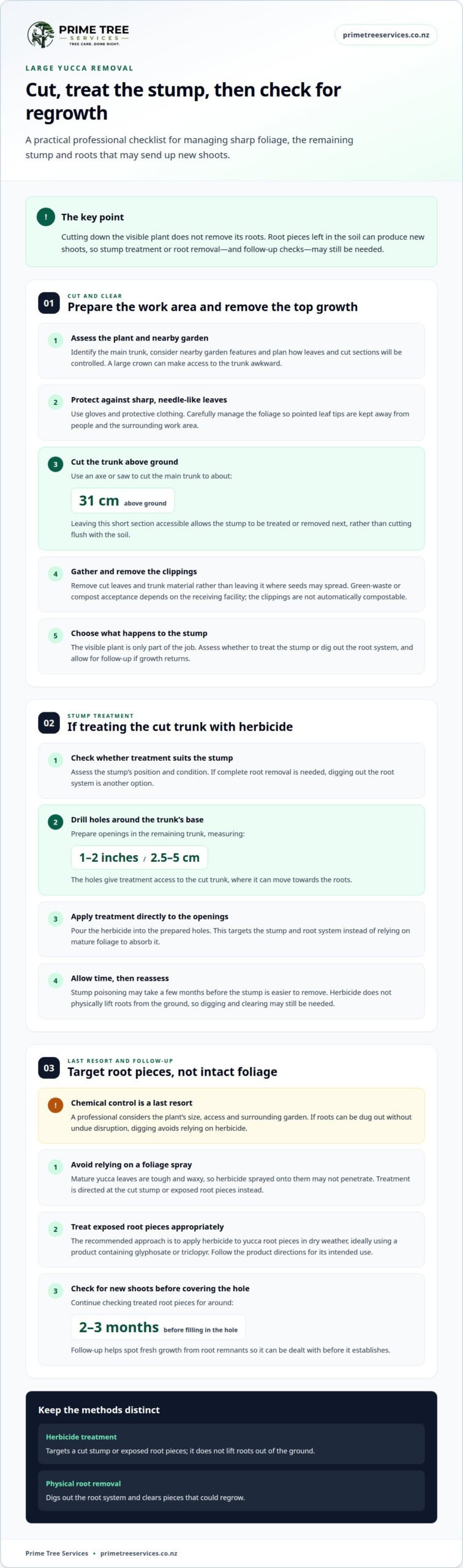
- Cut the main trunk at the right height. Using an axe or saw, the professional cuts the trunk to about 31 cm above ground. Leaving this short section makes the stump accessible for the next treatment or removal stage, instead of cutting flush with the soil.
- Clear and contain the clippings. The cut leaves and trunk material are gathered and removed, helping prevent seeds from spreading. Green-waste or compost acceptance depends on the facility receiving the material, so the clippings aren’t automatically treated as compostable.
- Plan what happens to the stump. Cutting down the visible plant doesn’t remove its roots, and pieces left behind can produce new shoots. The professional assesses whether to treat the stump or remove it, then allows for follow-up if growth returns.
How professionals apply herbicide to a cut trunk
For a cut yucca, professionals can apply herbicide through holes in the remaining trunk. The treatment can move through the root system and eventually kill the plant. This approach targets the stump directly, rather than relying on sprays to penetrate mature yucca foliage.
- Assess the cut trunk. The professional checks the stump’s position and condition, then decides whether treatment is suitable. If complete root removal is needed, digging out the root system is another approach. Root pieces left in the soil can produce new shoots.
- Prepare the stump. Holes are drilled around the trunk’s base, measuring 1 to 2 inches (2.5-5 cm). Their placement gives the treatment access to the cut trunk, where it can move towards the roots.
- Apply the herbicide to the holes. The professional pours the treatment into the prepared openings. Applying it directly to the stump helps it spread through the root system, rather than leaving the waxy foliage to absorb it.
- Allow time for the treatment to work. Stump poisoning may take a few months before the stump is easier to remove. The professional plans for that wait, then assesses whether further stump removal is needed.
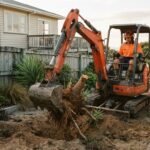
- Deal with roots if they’re being removed. Herbicide treatment doesn’t physically lift roots from the ground. For root removal, the professional digs out the root system and clears away pieces that could regrow, reducing the chance of fresh suckers appearing.
- Watch for new shoots. After treatment or removal, follow-up checks can reveal regrowth from root remnants. Any new shoots need attention before they establish, keeping the cleared area from filling with fresh yucca growth.
If a persistent stump needs a planned treatment and removal approach, talk through professional yucca stump removal.
Chemical control as a last resort: when professionals may use it
Chemical control is a last resort for a yucca that is difficult to remove. Mature leaves are tough and waxy, so herbicide sprayed onto foliage may not penetrate. Cutting the plant and treating the stump or exposed roots is one alternative to digging out the whole plant.
- Decide whether treatment is appropriate. A professional considers the plant’s size, access and surrounding garden before choosing chemical control. If the roots can be removed without undue disruption, digging them out avoids relying on herbicide.
- Target the cut plant, not its leaves. Spraying mature foliage may be ineffective because its waxy surface resists penetration. Professionals instead apply treatment to the cut stump or exposed root pieces, directing it towards the parts that can produce regrowth.
- Choose a suitable treatment. For yucca root pieces, the recommended approach is applying herbicide in dry weather, ideally using a product containing glyphosate or triclopyr. The professional follows the product directions for its intended use.
- Treat exposed root pieces. After cutting or digging, a professional identifies root sections left in the soil and treats them directly. This matters because even small remnants can send up new shoots, while treating the foliage alone may miss the source of regrowth.
- Keep the area under observation. After treating root pieces, professionals continue checking for new shoots for around two to three months before filling in the hole. That follow-up allows fresh growth to be spotted and dealt with, rather than buried under soil.
- Use treatment as part of a removal plan. Herbicide doesn’t lift a stump or clear roots from the ground. A professional combines chemical control with cutting, root removal or later stump work as needed, keeping the focus on preventing regrowth and restoring the garden area.
That limitation is why a foliage-only approach should not be treated as dependable for a mature yucca: its tough, waxy leaves rarely allow herbicide to penetrate. Chemical treatment is better understood as an alternative when the plant is cut down, rather than as a reason to spray intact foliage. In deciding between methods, the practical choice is whether to dig up the plant or cut it down and apply herbicide.
Why yucca plants are difficult to remove
- Account for the roots, not just the trunk. Yucca roots can begin 12 to 24 inches deep, and small pieces left behind can send up new shoots. For anyone deciding how to remove a large yucca plant, the root system matters as much as the visible trunk. A professional plans around it, then checks the cleared ground for remnants.
- Manage sharp leaves and heavy sections. Pointed yucca leaves can cause painful pricks, while a large trunk and crown can be awkward to control as they’re cut. Professionals use protective clothing and manage the plant in sections, reducing the risk of foliage or cut material striking people or nearby property.
- Consider the season alongside site conditions. There isn’t one best time of year that suits every New Zealand property. Professionals consider access, soil conditions and the work required; yucca’s evergreen leaves can continue feeding the roots over winter, so regrowth still needs attention during that season.
- Check local requirements for the site. Council requirements may depend on the yucca species and its location, so a professional considers the local context before removal. There isn’t one nationwide planting or removal rule for every yucca species and council area.
- Plan carefully near buildings and services. Knowing how to remove a large yucca plant beside a house, fence, pipes or underground services means planning controlled cutting and root removal around those features. A professional assesses the work area and considers how far the roots extend, limiting disturbance while clearing the ground.
Even after the main plant and visible roots have been dealt with, the work may not be finished. Yucca removal may require repeated checks and removal of new sprouts. Returning to the cleared area gives a chance to spot fresh growth and remove it before treating the job as complete. Keep checking the ground where the plant was removed, rather than assuming the first clearance has resolved the problem.
A follow-up plan is therefore part of thorough removal. Continue checking for sprouts and remove them when they appear; a single visit may not be enough to address new growth.
Prime Tree Services: Palm & Yucca Care and Removal
Prime Tree Services provides Palm & Yucca Care and Removal for property owners facing an overgrown plant, stubborn stump or recurring shoots. It’s a practical next step when cutting the trunk hasn’t dealt with the roots, or when sharp foliage and a difficult position make removal a challenging job.
The work can be planned around the plant and its surroundings, including whether the stump needs treatment or removal. If a yucca sits close to a house, fence or garden, professional assessment helps shape an approach that clears the space while accounting for nearby features. For a property with other outdoor work, the team also offers Tree Removal & Felling, alongside pruning services.
Contact Prime Tree Services to discuss yucca removal for your property.
Give the cleared space a plan
Before work begins, think about what you want the cleared area to make possible: easier access along a path, a tidier boundary, or more room around an existing garden. That end goal helps shape the conversation about how to remove a large yucca plant and what should happen to the stump and ground afterwards. A clear brief about nearby features and your preferred finish gives the removal team useful direction from the outset.
Prime Tree Services also provides Tree Removal & Felling, Tree Pruning and Canopy Care, and Hedge Trimming and Pruning Services. If you’re planning broader outdoor work, you can discuss those needs alongside the yucca removal.
Once you know the result you want, arrange a free site visit and written quote from Prime Tree Services. The crew can discuss a suitable plan for your Tauranga property and the cleared space.
Frequently Asked Questions
How Can a Professional Get Rid of a Yucca Plant?
A removal plan should account for the visible plant, stump and roots, since remaining roots can produce new shoots. The method depends on the yucca’s position and how its roots affect nearby areas. For example, digging may disturb a neighbouring garden, while stump treatment may be considered instead; where extraction is practical, removing root pieces can help reduce regrowth.
How deep and wide are yucca roots and how far do they spread?
Yucca roots can start 12 to 24 inches deep, but their full spread varies with the plant and growing conditions. For stump removal, digging may extend around a metre in diameter and at least one metre deep to reach the root system. These are working dimensions, not a guarantee that every root ends within that area, so professionals check for remaining pieces.