Height affects the work involved, so it’s an important factor in the cost to remove a phoenix palm in Tauranga. The price depends on the palm, site access and requested cleanup, and is provided in a written, fixed quote after a free site visit. Frond and stump work should be included in the agreed scope.
If you’re weighing up removal, it makes sense to want a clear picture of the likely work and what happens to the palm once it’s down. This article explains how height affects pricing, why phoenix palms can take extra care to remove, and what to expect from frond disposal and site restoration. You’ll have a practical sense of the decisions involved before arranging removal, without guesswork about what the job covers.
Key Takeaways
- Tree height is a key cost factor, while access and the work involved also shape the quote.
- Phoenix palm spines can make removal hazardous, so safe handling and protective equipment matter.
- Plan for bulky fronds and green waste, which can affect cleanup and how tidy the site is afterwards.
- Understand how local council rules and the condition of the site may affect removal and restoration plans.
How Much Does Palm Tree Removal Cost in NZ?
There isn’t one price for removing a phoenix palm in Tauranga. The quote reflects the palm’s height, access, nearby structures, safe handling and the agreed scope, including whether stump grinding is required. Prime Tree Services provides a free site visit followed by a written, fixed quote.
Height affects the work: a taller palm may need climbing or elevated equipment, while a confined yard can require more careful handling. Phoenix palm spines add another challenge. They can pierce gloves and cause serious injuries, so protective equipment and controlled handling matter. Fronds and trunk fibres can also be sharp, making an improvised cut-down unsafe.
Can a phoenix palm be transplanted instead of removed in Tauranga? A young palm may be more practical to transplant than an established one, but its suitability depends on size, condition and the disturbance involved. Large palms are generally assessed for removal rather than assumed suitable for relocation.
Do I need a resource consent to remove a palm tree in Tauranga? Requirements depend on the tree’s location and applicable planning controls. Nikau palms have separate legal protection in New Zealand, so don’t apply rules for nikau automatically to a phoenix palm. Confirm the site-specific position before work begins.
What is the best time of year to remove a phoenix palm in New Zealand? There is no single season that suits every Tauranga property. Access, ground conditions, nearby plants and safe working conditions are more useful considerations than choosing a month alone.
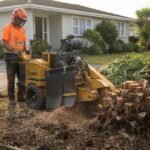
Phoenix palm removal methods and equipment depend on height and surroundings. A crew may climb or use elevated equipment, then lower sections in a controlled way where space is tight. Close buildings, fences or power lines leave less room for falling material, increasing the need for careful planning. For hedges crowding an access route, hedge removal in Tauranga may help open up the work area.
Green waste and frond disposal
A felled phoenix palm leaves more behind than its trunk. Long, stiff fronds create bulky green waste, and their shape can make handling awkward in a narrow Tauranga yard. The volume depends on the palm’s size and how many fronds are removed, so plan cleanup alongside the cutting. A clear route from the tree to the collection point helps protect garden beds and lawns.
Phoenix palm fronds may not chip as easily as ordinary branches, so disposal needs to be considered in the work plan. Their handling can affect cleanup. Make sure the written, fixed quote after a free site visit states whether frond removal from the property is included, rather than covering only the felling.
Practical disposal options include a green-waste facility or landfill, where accepted. Sort the material according to the disposal route, keeping bulky fronds separate from smaller garden debris if needed. Don’t assume every green-waste service accepts phoenix palm material; its stiff, fibrous fronds may be treated differently from soft leaves or hedge clippings.
The site also needs attention after the last frond is removed. A thorough cleanup includes gathering loose pieces and clearing the access route. If the palm stood beside a fence or patio, debris can collect in corners or among garden plants, so those areas need a final sweep. Stump grinding is a separate part of the scope and determines how the ground can be left.
For a clear plan, describe the palm’s position, access and desired cleanup when arranging a quote. You can talk through frond disposal and site cleanup before work is scheduled, so the scope covers both removal and what happens to the green waste afterwards.
For medium-height palms, removal may require climbing or elevated equipment, and their fronds create a significant volume of green waste. Auckland guidance recommends disposing of removed phoenix palm material in green waste or landfill when practical, making the disposal route worth confirming before the work starts.
Palm removal costs by height
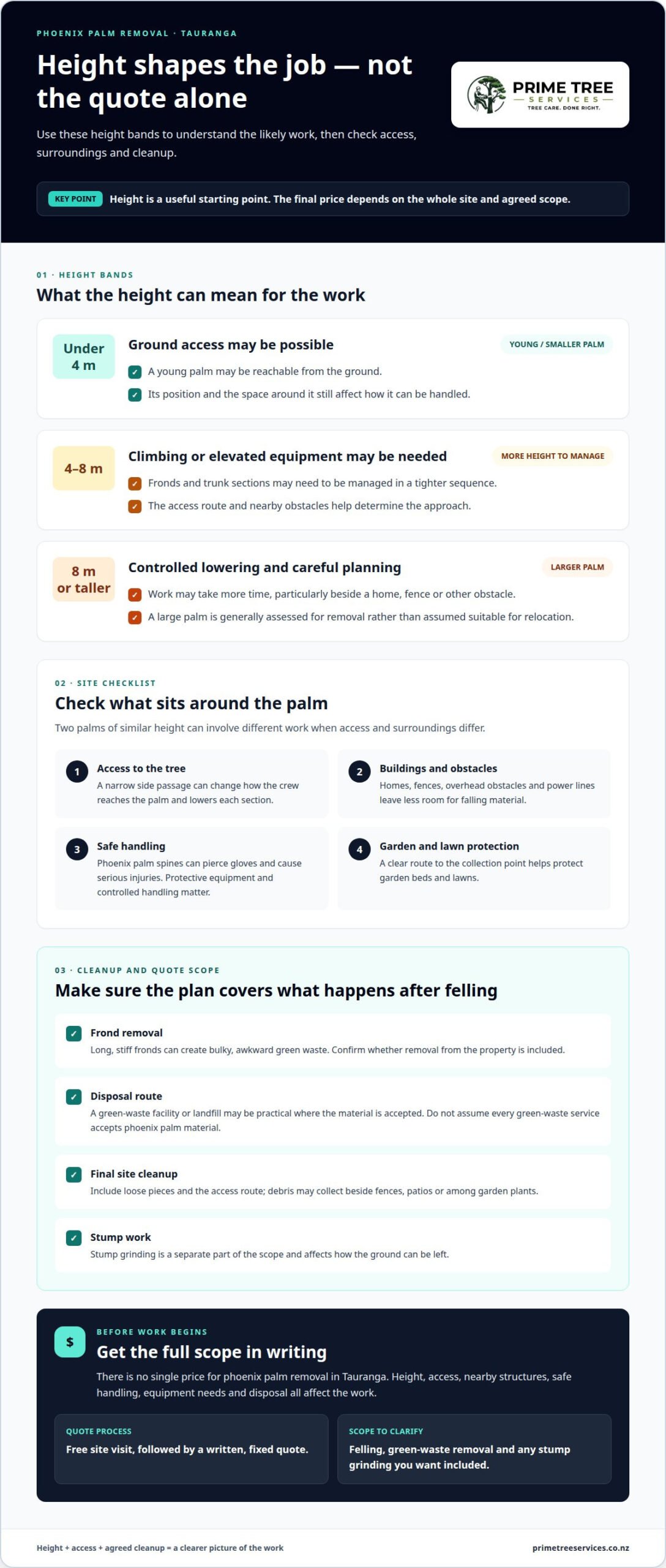
Height gives a useful starting point for estimating removal work, but it doesn’t set the final price by itself. In New Zealand, a small palm under 4 metres is generally simpler to handle than a mature specimen. A 4-8 metre palm may need climbing or elevated equipment, while a palm 8 metres or taller can require more controlled work and careful planning around its surroundings.
The price depends on the case and is given after a quote request; height, access, nearby buildings, equipment needs and disposal all affect the work. A narrow side passage, overhead obstacles or a garden that must be protected can change how the crew reaches and lowers each section. Those details matter alongside the palm’s height.
- Under 4 metres: A young palm may be reachable from the ground, depending on its position and surrounding space.
- 4-8 metres: Greater height can mean climbing or elevated equipment, with fronds and trunk sections managed in a tighter sequence.
- 8 metres or taller: A large palm may need more time and controlled lowering, especially beside a home, fence or other obstacle.
These bands help explain why two palms of similar height may involve different work. For example, an 8-metre palm in an open section can be easier to access than a shorter palm crowded between a house and boundary fence. Phoenix palm spines also require protective handling, while bulky fronds affect the cleanup plan.
Ask for the written quote to set out the full scope: felling, green-waste removal and any stump grinding you want included. That makes it clear what happens after the palm is cut down. For palm and yucca care and removal, Prime Tree Services assesses height and access together as part of the site visit.
The practical takeaway is simple: use height to understand the job, then consider access and what needs clearing. Height alone doesn’t determine the quote, but larger palms can involve more complex handling.
Tauranga council rules for removing a phoenix palm
For a phoenix palm in Tauranga, don’t assume Auckland rules apply. Auckland pest-management guidance is regional and doesn’t establish Tauranga requirements. Consent requirements depend on the property’s location and applicable planning controls, so identify the palm and check the specific site position before arranging removal.
Start by identifying the palm correctly. A phoenix palm and a New Zealand nikau are different trees, and their legal treatment differs. In New Zealand, nikau palms are protected by law and cannot be removed without resource consent from the relevant council. That rule applies to nikau, not automatically to phoenix palms.
If you’re unsure of the species, take clear photographs of the trunk, fronds and whole tree. Share the property address and images with Tauranga City Council when asking about applicable planning controls. This gives the council useful details to assess the site rather than relying on a general assumption about every palm.
Before arranging removal, clarify three points:
- Species: Confirm whether the tree is a phoenix palm or a protected nikau.
- Site: Give Tauranga City Council the property address and the tree’s position on the section.
- Scope: Explain whether the work involves felling only, stump removal, or clearing surrounding vegetation.
Keep any council response with the property records, especially if it identifies conditions or further steps. If a neighbour, body corporate or property manager is involved, settle access and ownership questions separately from council requirements. Those conversations don’t replace council advice about planning controls.
The practical takeaway is to confirm the species and site position before work starts. Don’t use Auckland phoenix-palm guidance as a Tauranga rule, and don’t confuse phoenix palms with protected nikau. A site-specific answer helps prevent avoidable delays and keeps the removal plan clear.
Prime Tree Services: Palm & Yucca Care and Removal
Prime Tree Services provides Palm & Yucca Care and Removal for Tauranga property owners considering phoenix palm removal. It’s a relevant service when a palm has outgrown its space, its sharp fronds are difficult to manage, or removal is preferable to continued care.
To discuss the job, describe the palm’s approximate height, position and access conditions. Mention nearby buildings or fences, and whether you want stump grinding and frond removal included. These details help define the scope so the removal plan reflects the tree and its setting.
If you’re ready to talk through removing a phoenix palm, contact Prime Tree Services to discuss the work you need.
Make room for what comes next
Removing a phoenix palm can be a useful opportunity to rethink how you want the space to work. Before work begins, consider whether you want an open lawn, clearer access or more room around an existing garden. A clear idea of the finished space helps shape decisions about removal and any related tree work.
If you’re ready to remove a phoenix palm in Tauranga, Prime Tree Services can discuss the work and the setting around it. Services also include Tree Removal & Felling, Tree Pruning and Canopy Care, and Hedge Trimming and Pruning Services for related tree and hedge needs around your property.
A straightforward conversation is a good place to start. Explain what you want cleared and how you’d like the outdoor area to look afterwards.
With a clear plan, the space can be prepared for its next use.
Frequently Asked Questions
What does phoenix palm removal cost in Tauranga?
The price is set after a free site visit, with a written, fixed quote. The assessment considers the palm’s size and position, equipment access and the requested scope. The quote can clarify whether it includes felling, green-waste removal or stump grinding. Accurate site details help ensure it reflects the work you want completed.
How do I get an arborist quote for phoenix palm removal in Tauranga?
Request an assessment and describe the palm’s location, approximate height and access route. Photos showing nearby buildings, fences or overhead lines can help explain the setting before the site visit. Prime Tree Services provides a free site visit and a written, fixed quote. Be clear about whether you want the fronds removed and the site cleared, so the proposed scope matches your needs.
How do I find a qualified tree removal contractor in Tauranga?
Prime Tree Services has qualified arborists, full public liability cover and works to New Zealand safety standards. For a phoenix palm near a house, glass or garden beds, the crew can use controlled rigging over houses, glass, and gardens. A clear written scope helps you understand what the removal includes and what to expect at your Tauranga property.