For most New Zealand hedges, plan the first trim in spring, from September to November, with a follow-up in late summer, in February or March. The best time to prune hedges in NZ in 2026 still depends on the plant: evergreen hedges can take light trims up to twice yearly, while slow-growing or formal hedges typically need one or two trims a year. A calendar helps, but the hedge’s growth and condition matter too.
It’s easy to assume that more trimming means a tidier hedge, but cutting at the wrong time or too hard can leave it thin and stressed. This guide explains seasonal timing, how often different hedge types need attention, and why heavy reduction is best done in late winter or early spring. You’ll also learn to check for nesting birds before trimming from September to February, shape the sides so light reaches lower branches, and avoid mistakes that make a hedge harder to keep even. With the right schedule, you can keep your hedge neat and support healthy growth.
Key Takeaways
- Time deciduous hedge pruning for dormancy, and give slow-growing Buxus a simple annual shaping trim.
- Keep autumn work light, and avoid heavy cuts as growth slows towards winter.
- Shape the hedge with a narrower top so sunlight can reach the lower branches.
- Trim the top to encourage denser growth, but plan heavy reductions carefully to help an overgrown hedge recover.
Common trimming mistakes
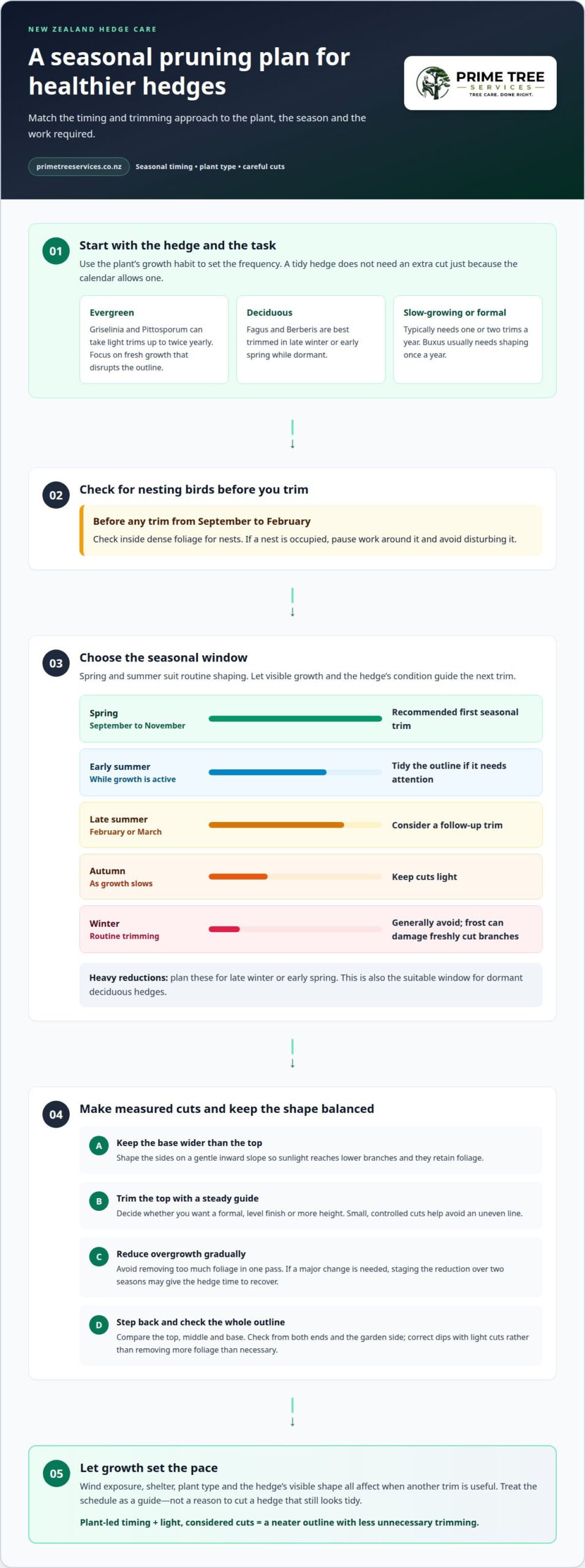
A hedge with vertical sides can lose light near its base. Shape the sides on a gentle inward slope, keeping the bottom wider than the top. This profile lets sunlight reach lower branches and helps them retain foliage. When trimming a Griselinia boundary, check the lower edge as you work. If it is already sparse, avoid cutting away more of its leafy outer growth.
Cutting the top too early can spoil the shape. Trimming encourages denser growth, so decide first whether you want a formal, level finish or more height. For a neat, flat top, use a clear guide and make small, controlled cuts. Avoid removing large chunks from one section, as this can leave an uneven line that stands out across the garden.
Another common mistake is removing too much foliage in one pass. A hard cut can expose bare inner branches, leaving gaps that take time to fill. With an overgrown Pittosporum, assess the whole hedge before reducing its height or width. If a major change is needed, staging the reduction over two seasons may give the hedge time to recover. Smaller cuts also make it easier to keep the outline balanced.
Don’t trim by following one side alone. Step back to view the full hedge, then compare the top, middle and base before finishing. A level top can still look lopsided if one end is taller. Check the outline from both ends and from the garden side, correcting dips with light cuts rather than removing more foliage than necessary.
- Base: Keep it wider than the top so lower branches receive sunlight.
- Top: Trim with a steady guide for an even finish and denser growth.
- Overgrowth: Plan a staged reduction rather than stripping the hedge in one pass.
Evergreen, deciduous and slow-growing hedge care
Hedge type affects trimming frequency: evergreen, deciduous and slow-growing plants respond differently. Match each cut to the plant’s growth habit to maintain a tidy, healthy outline.
Evergreen hedge care
Evergreen hedges, including Griselinia and Pittosporum, keep their foliage year-round and can take light trims up to twice yearly. Regular, restrained cuts maintain a clear boundary without removing too much leafy growth at once. Focus on fresh growth that disrupts the outline, rather than cutting deeply into older, bare sections. This helps keep the green screen intact and routine shaping manageable.
Deciduous and slow-growing hedge care
Deciduous hedges lose their leaves seasonally, while slow-growing varieties need less frequent shaping. Fagus and Berberis are best trimmed in late winter or early spring while dormant, before active seasonal growth begins. Slow-growing or formal hedges typically need one or two trims a year. Buxus usually needs shaping once a year, so don’t treat it like a fast-growing privacy hedge. A measured schedule limits unnecessary cutting and preserves a crisp formal outline.
Pruning months for common hedge plants
Late winter or early spring suits dormant deciduous hedges and heavy reductions, while light evergreen trimming is better outside late autumn. Before trimming any New Zealand hedge from September to February, check for nesting birds. Hedges provide shelter as well as a boundary, and nests can be tucked inside dense foliage. Pause work around an occupied nest and avoid disturbing it.
For a mixed hedge, let the plants needing the gentlest treatment set the pace. Note which sections are evergreen, deciduous or slow-growing, then plan each cut around that plant’s season and growth. A Buxus border, for example, doesn’t need the same repeated attention as a faster-growing Griselinia screen. If a hedge needs a more tailored trim, get help planning its pruning.
How Often Should You Trim Hedges in New Zealand?
Many hedge schedules start with a spring trim, then adjust to the plant’s growth and the finish you want. In Tauranga, watch how fresh growth changes the hedge’s shape instead of relying on one fixed routine for every garden.
Regional effects on hedge growth
Local conditions affect how quickly a hedge needs another trim, even within Tauranga. A boundary exposed to wind may grow differently from one sheltered by nearby buildings. Plant type matters too: a fast-growing privacy screen can lose its outline sooner than a slow-growing formal hedge. Use visible growth and shape to judge when another light trim is useful.
Trimming frequency depends on the plant and its setting. Slow-growing or formal hedges typically need one or two trims a year. Griselinia and Pittosporum can take light trims up to twice yearly. Treat these as starting points, not a reason to cut when the hedge still looks tidy. For a newly planted or recently reduced hedge, let its regrowth and desired shape guide the next trim.
Seasonal hedge pruning
Spring, early summer and late summer are the main windows for shaping. Spring trimming is recommended from September to November as the first trim of the season. A late-summer follow-up is recommended in February or March. Early-summer work can maintain the outline while growth is active. Should hedges be pruned in spring, summer, autumn or winter in New Zealand? Spring and summer suit routine shaping; keep autumn work light and generally avoid winter trimming.
- Spring, September to November: make the first seasonal trim.
- Early summer: tidy active growth if the shape needs attention.
- Late summer, February to March: consider a follow-up trim.
- Autumn: keep cuts light as growth slows.
- Winter: trimming is generally discouraged because frost can damage freshly cut branches.
In Tauranga, let the hedge’s growth set the pace between these seasonal windows. A consistent outline usually needs less correction than a hedge left to grow beyond its intended shape.
What months are best for pruning common hedge plants in NZ?
Choose pruning months according to the plant type and the work required. In New Zealand, late winter or early spring suits heavy hedge reductions, while nesting-bird checks are important during the warmer trimming period.
For deciduous Fagus and Berberis, the useful window is late winter or early spring, while the plants are dormant. This lets you shape them before the main growth season. For evergreen Griselinia and Pittosporum, avoid trimming in late autumn. Instead, plan a light trim around active growth to keep the foliage screen intact, rather than making a substantial cut as growth slows.
The right month also depends on whether you’re tidying a hedge or reducing it substantially. Light shaping and heavy reduction are different jobs. Plan a major reduction for late winter or early spring, just before the main growth season. An overgrown hedge may need reduction staged across two seasons, with time to recover between cuts.
- Late winter or early spring: tackle heavy reductions and dormant Fagus or Berberis.
- Spring: plan routine shaping before growth becomes difficult to manage.
- Early summer: tidy active growth when a hedge needs its outline maintained.
- Late summer: consider a follow-up trim where fresh growth has disrupted the shape.
- Late autumn and winter: avoid late-autumn cuts on evergreens and heavy work as growth slows.
Before trimming any hedge from September to February, check carefully for nesting birds. Dense Griselinia or Pittosporum foliage can conceal a nest, so inspect the area before work begins. If you find an occupied nest, leave that section undisturbed and plan the trim for another time. The calendar helps set the window, but the plant and the job determine the cut.
Prime Tree Services
Prime Tree Services can help when a hedge needs more than a quick seasonal trim. Our Hedge Cutting & Shaping service is suited to routine shaping, uneven growth and hedges that have become difficult to manage. The right approach depends on the plant, its condition and the reduction required, keeping the work in step with the hedge’s growth.
If you’re unsure how to manage an overgrown hedge or want a tidy, consistent finish, professional pruning can take the strain out of the job. For broader garden clearance, our Shrub Pruning & Clearance service can also open up the space around the hedge.
Contact Prime Tree Services to discuss your hedge.
Make a plan for the whole outdoor space
Use your next garden tidy-up to consider how the hedge fits with nearby trees and shrubs. A clear plan can help keep the boundary looking cared for while leaving enough room for the rest of the garden to thrive. The best time to prune hedges in NZ in 2026 is a useful starting point, but the next step is deciding which work will make the biggest difference to your property.
Prime Tree Services offers Hedge Cutting & Shaping, alongside Tree Pruning & Canopy Care and Tree Removal & Felling. These services can help when work extends beyond the hedge, such as managing an overhanging canopy or removing a tree. We provide a free site visit and a written, fixed quote, so you can review the proposed work and decide how to proceed.
A well-kept outdoor space starts with a practical plan. The right care can help your garden feel open, tidy and ready to enjoy.
Frequently Asked Questions
When is the best time to prune hedges in New Zealand?
Spring and late summer are the main windows for routine trimming in New Zealand. For Tauranga, the best time to prune hedges in NZ in 2026 depends on the plant and the cut: spring, from September to November, suits the first trim; February to March suits a follow-up if growth needs it. Check for nesting birds before trimming from September to February, and leave an occupied nest undisturbed.
When should you prune native hedges such as griselinia, pittosporum and hebes in NZ?
For Griselinia and Pittosporum, the best time to prune hedges in NZ in 2026 is during active growth, keeping trims light and avoiding late autumn. Both can take light trims up to twice yearly. For Hebes, use a light touch and shape according to the plant’s growth and the finish you want, rather than applying the same schedule to every native hedge.
When should you prune popular evergreen hedges such as privet, box and leylandii in New Zealand?
Light shaping during active growth suits evergreen hedges, while late autumn is a poor time to trim them. Box, or Buxus, is slow-growing and typically needs shaping once a year. For privet and Leylandii, let the growth rate and the hedge’s outline guide any additional trimming. Check carefully for nesting birds before cutting during the September-to-February period.
When should deciduous hedges be pruned in NZ?
Prune deciduous hedges such as Fagus and Berberis in late winter or early spring while they’re dormant. This gives you a window to shape them before the main growth season. For example, if a Fagus hedge needs a substantial reduction, plan it for late winter or early spring instead of treating it like an evergreen hedge that needs routine light shaping.
How often should hedges be trimmed in New Zealand?
Let the hedge’s growth rate and desired finish guide trimming frequency. Slow-growing or formal hedges typically need one or two trims a year, while Buxus usually needs shaping once yearly. Griselinia and Pittosporum can take light trims up to twice yearly. Check the outline as it changes to see whether a trim is needed, rather than cutting by habit.
How does hedge pruning timing vary by region and climate in New Zealand?
Regional conditions influence how quickly a hedge grows, so trimming frequency can vary between gardens. In Tauranga, assess fresh growth and how quickly the hedge loses its shape instead of following a schedule designed for another place. A sheltered boundary and an exposed one may grow differently. Use the plant’s condition to guide routine shaping, and keep heavy reductions to the recommended season.