A yucca’s bold shape doesn’t tell you whether it’s naturalised. For yucca plant removal in Tauranga, the key is identifying which plant you have: Yucca gigantea is an exotic plant occasionally grown indoors or outdoors in New Zealand, and was first recorded as naturalised here in 2010 at Patea in Taranaki. One wild collection has been recorded, apparently growing from dumped garden waste. Naturalised means a plant is growing beyond cultivation, rather than remaining where it was deliberately planted and cared for.
Yuccas are easy to group by their stiff leaves, but leaf tips and stems help tell them apart. This guide explains common yucca names, the features to look for, and what naturalised status means in New Zealand. You’ll get a clearer picture of the plant in your Tauranga garden before deciding how to manage its removal.
Key Takeaways
- Learn the visible differences between common yuccas, including the leaf tips that can help identify them.
- Understand what “naturalised” means in New Zealand and what recorded wild growth tells us about yuccas.
- Find out what to consider before removing a yucca in Tauranga, including how the plant’s setting affects the job.
- Explore how roots and plant material can be handled to help prevent unwanted regrowth and keep the area tidy.
Tauranga tree removal rules for yucca plants
A yucca is recognised by its firm, sword-shaped leaves and woody stems. Before planning yucca plant removal in Tauranga, identify the species and assess where it grows. These details help clarify the work involved and the conditions at the site.
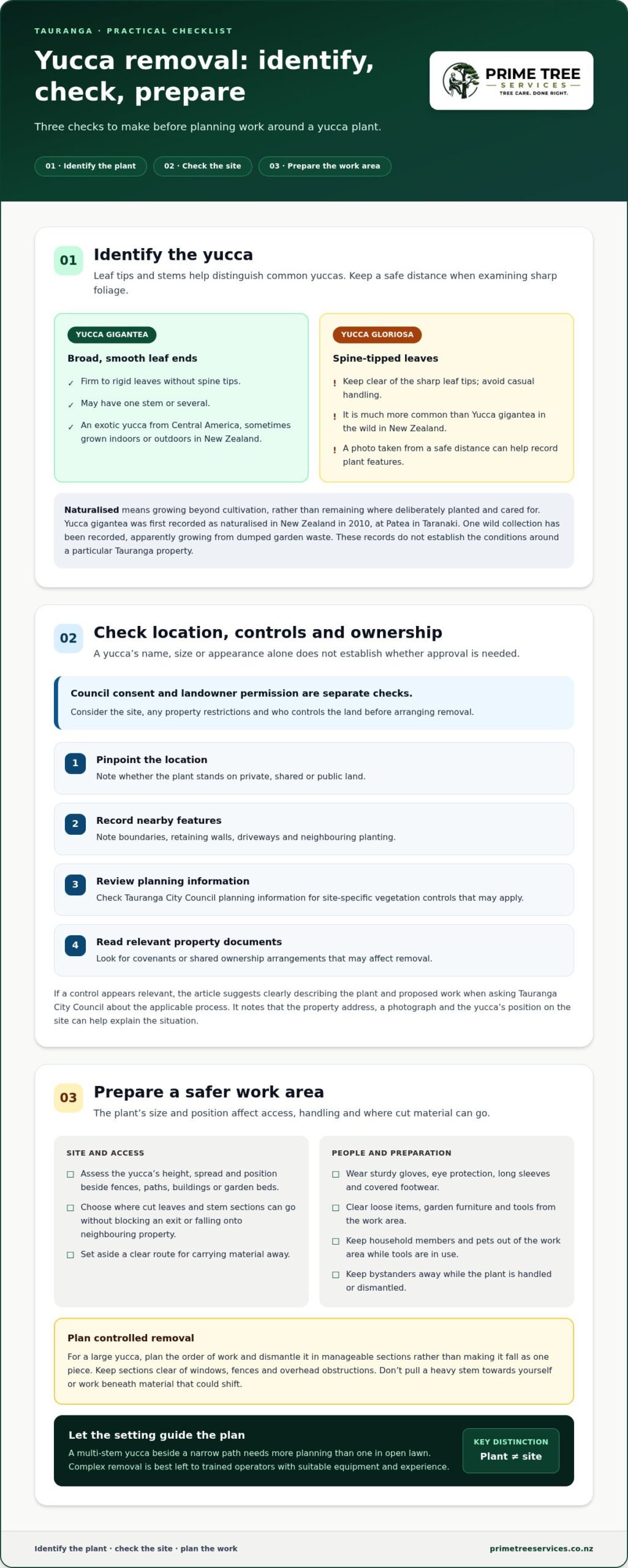
Yucca gigantea is an exotic yucca from Central America, sometimes grown indoors or outdoors in New Zealand. It may have one stem or several, with firm to rigid leaves that lack spine tips. Look for broad, smooth leaf ends rather than sharp points.
Yucca gloriosa has spine-tipped leaves and is much more common than Yucca gigantea in the wild in New Zealand. Keep clear of the leaf tips when examining a plant, and avoid handling sharp foliage casually. A photograph taken from a safe distance can help record its features.
Naturalised describes a plant growing outside cultivation, rather than only in a place where it was deliberately planted. Yucca gigantea was first recorded as naturalised in New Zealand in 2010, at Patea in Taranaki. One wild collection has been recorded, and the plant appeared to have grown from dumped garden waste. These records describe the plant’s status in New Zealand; they don’t identify the conditions around a particular Tauranga property.
For a practical removal plan, note whether the yucca stands alone or is close to a fence, building, path or other planting. For example, a yucca beside a hedge may need a different access plan from one in an open lawn. If the hedge also needs work, Tauranga hedge removal is a separate property task to consider.
Treat species identification and site conditions as separate questions. Naturalised status explains a plant’s presence beyond cultivation; its location, sharp leaves and nearby features help inform safe handling and removal planning.
Do I need council consent to remove a yucca in Tauranga?
Council consent is formal approval for work controlled by local planning rules. A yucca’s common name alone does not establish whether approval is needed for removal. In Tauranga, consider the site, the plant’s status and any property restrictions. Consent and safe removal are separate matters.
A protected tree is covered by a specific planning control or property restriction. Don’t assume a yucca is protected or exempt based only on its size or appearance. Review the property’s planning information and title documents for controls that may affect vegetation removal. A yucca beside a driveway may raise different site questions from one on a reserve or road frontage.
Landowner permission is approval from the person or organisation responsible for the land. If the yucca is not on land you own, establish who controls the site before arranging work. A plant on a shared boundary, berm or common property may involve someone beyond your household. Council consent and landowner permission are separate checks.
Use this practical sequence before setting a removal date:
- Pinpoint the yucca’s location, including whether it stands on private, shared or public land.
- Record nearby features, such as a boundary, retaining wall, driveway or neighbouring planting.
- Review Tauranga City Council planning information for site-specific vegetation controls that may apply.
- Read relevant property documents for covenants or shared ownership arrangements affecting removal.
If a control appears relevant, describe the plant and proposed work clearly when asking Tauranga City Council about the applicable process. Include the property address, a photograph and the yucca’s position on the site. These details can help distinguish a straightforward garden removal from work affected by planning or ownership restrictions.
Identifying a plant as a yucca does not settle consent requirements. The site’s controls and ownership determine what approvals may be needed, so resolve those questions before cutting or digging.
How to safely remove a large yucca plant
A work zone is the cleared area around a plant where removal takes place. Before starting, assess the yucca’s height, spread and position beside fences, paths, buildings or garden beds. Decide where cut leaves and stem sections can go without blocking an exit or falling onto neighbouring property. Keep household members and pets out of the work area while tools are in use. For yucca plant removal in Tauranga, the garden layout affects how material can be handled and carried away.
Protective equipment is clothing and gear that helps reduce contact with sharp foliage and rough plant material. Wear sturdy gloves, eye protection, long sleeves and covered footwear when handling a yucca. Yucca gloriosa has spine-tipped leaves, so avoid reaching through the foliage or leaning over the crown. Even without spine tips, firm leaves can make close handling awkward.
Controlled removal means dismantling a plant in manageable sections rather than making it fall as one piece. For a large yucca, plan the order of work before cutting, and keep each section clear of windows, fences and overhead obstructions. Don’t pull a heavy stem towards yourself or work beneath material that could shift. A yucca plant removal job in Tauranga may need a different approach if stems lean over a boundary or sit close to a shed.
Use this preparation sequence before any cutting:
- Clear loose items, garden furniture and tools from the work area.
- Mark the plant’s position and note nearby walls, paving and planted beds.
- Set aside a clear route for carrying away leaves and stem sections.
- Keep bystanders away while the plant is being handled or dismantled.
A large, multi-stem yucca beside a narrow path needs more planning than a plant in open lawn. Avoid improvised pulling or cutting that could send material into nearby structures or garden beds. Leave complex removal to trained operators with suitable equipment and experience. A controlled approach helps protect surrounding property and leaves the area ready for its next use.
Yucca root removal and disposal methods
A yucca’s root system anchors the plant and may produce new shoots. After the main stem is cut, roots can remain beneath the soil, so excavation may be needed. The method depends on the plant’s size, soil conditions and proximity to paving, fences or garden beds.
Root suckers are new shoots that grow from roots away from the main stem. Yucca gigantea can be propagated by root suckers, cuttings and seeds, so avoid scattering viable plant pieces around the site. Check the cleared ground for visible roots and shoots, especially around the former base.
Root excavation involves loosening soil and lifting out the main root mass. Clear loose foliage first, then expose the soil around the base with a spade. Work carefully near pipes, edging and planted borders. If roots extend beneath a path or wall, avoid levering against the structure and potentially damaging it.
- Clear leaves and loose debris from around the base.
- Loosen soil around the root mass, keeping tools clear of nearby features.
- Lift out accessible roots and inspect the exposed ground for remaining pieces.
- Gather roots, stem sections and cut foliage into a contained pile.
Plant waste includes the foliage, stems, roots and seeds removed during the job. Keep it together rather than spreading pieces across the garden or leaving them beside an untreated area. Where practical, separate soil from plant material, and contain sharp leaves during handling to reduce accidental contact.
Disposal means taking collected plant waste to an appropriate green-waste facility or arranging suitable collection. Don’t assume every facility accepts yucca material; rules can vary by facility and waste type. Keep the pile secure until removal, especially if leaves have sharp tips or root pieces could spread.
If the root mass is large, firmly established or close to hard surfaces, professional yucca removal can help manage excavation and leave the site clear.
Prime Tree Services: Tree Removal & Felling
Prime Tree Services provides Palm & Yucca Care and Removal for Tauranga property owners with overgrown or difficult-to-access yuccas. A heavy crown, sharp leaves, multiple stems or roots close to paving can make removal more involved. Tree Removal & Felling is also available when larger vegetation needs controlled removal as part of the same property job.
Choose professional help when cutting and digging feel difficult to control, or when nearby fences, paths and garden beds need care. For a small yucca in open ground, the identification and planning steps above can help you understand the work involved. For a larger plant, describe its position and surrounding features when you get in touch.
Contact Prime Tree Services to discuss yucca plant removal in Tauranga.
Make room for the garden you want
Once you’ve decided what should stay, plan how the cleared space will work for your home. An open patch could make a path easier to use, give nearby planting more room or simply leave the garden looking tidier. For yucca plant removal in Tauranga, consider how the area should look and function after the work.
Prime Tree Services can also help with other outdoor maintenance. Tree Pruning & Canopy Care can shape overgrown tree growth, while Hedge Cutting & Shaping can tidy a rough boundary. Tree Removal & Felling is available when a tree needs removal. Choosing work that suits the space helps keep the wider garden cared for, rather than focusing only on the yucca.
Take the next step towards a clearer, more usable outdoor space.
A tidier garden can give the rest of your outdoor space room to shine.
Frequently Asked Questions
What yucca plant removal services are available in Tauranga?
Prime Tree Services provides Palm & Yucca Care and Removal in Tauranga, including removal of difficult, invasive or overgrown yuccas. This service can suit a plant crowding a path, leaning over a fence or taking space from a planned garden change. After a free on-site assessment, you receive a written, fixed quote. The qualified crew works to New Zealand safety standards and leaves the site tidy, with debris chipped, raked and swept.