What if the main safety gap during tree work isn’t the paperwork, but what happens around the work zone? A tree crew may be focused on the job, while your staff, customers, vehicles and neighbouring operations still need safe routes and clear instructions.
If you’re researching commercial tree safety compliance tauranga, it’s reasonable to be unsure where your responsibility ends and a contractor’s begins, or what to check before work starts. The practical starting point is to treat safety as ongoing site coordination, not a folder of forms.
This guide explains how to plan tree work around people, buildings and daily operations, agree practical controls with your contractor, and keep useful records. It also covers when to check current WorkSafe guidance, Tauranga City Council rules and site-specific restrictions. With the right checks in place, planned pruning or tree removal can be coordinated more safely with the working day.
Key Takeaways
- Plan commercial tree safety compliance tauranga as ongoing site coordination, with controls that suit your workplace and daily operations.
- Look beyond paperwork. Check who could be exposed to falling material, equipment movements, overhead obstacles and changes to public or vehicle access.
- Before work begins, confirm the scope, identify affected people, agree site controls and communication, then brief everyone who needs to know.
- Compare contractors on relevant experience, proposed methods and communication. Ask to verify evidence of competencies, insurance and safety planning.
What commercial tree safety compliance means for Tauranga worksites
For commercial tree safety compliance tauranga, a completed form is only one part of the job. Planning means coordinating controls across the site and reviewing them when conditions change. That matters at workplaces, retail grounds, body corporates and industrial properties, where tree work can affect workers, contractors, visitors, traffic, buildings and neighbouring sites.
A tree hazard assessment identifies hazards around a tree; worksite safety coordination manages how the job and its controls affect everyone and everything around it. Arboriculture covers the care and management of trees, including the use of arboricultural methods to assess and manage tree hazards. The assessment informs the work plan, but it doesn’t replace site-wide coordination.
Who has health and safety responsibilities during tree work?
Under New Zealand’s Health and Safety at Work Act 2015, a PCBU, a person conducting a business or undertaking, must manage health and safety risks so far as is reasonably practicable. The business controlling the site and the tree contractor may have overlapping duties. Hiring a contractor doesn’t transfer every responsibility to them, and the contractor’s own duties remain.
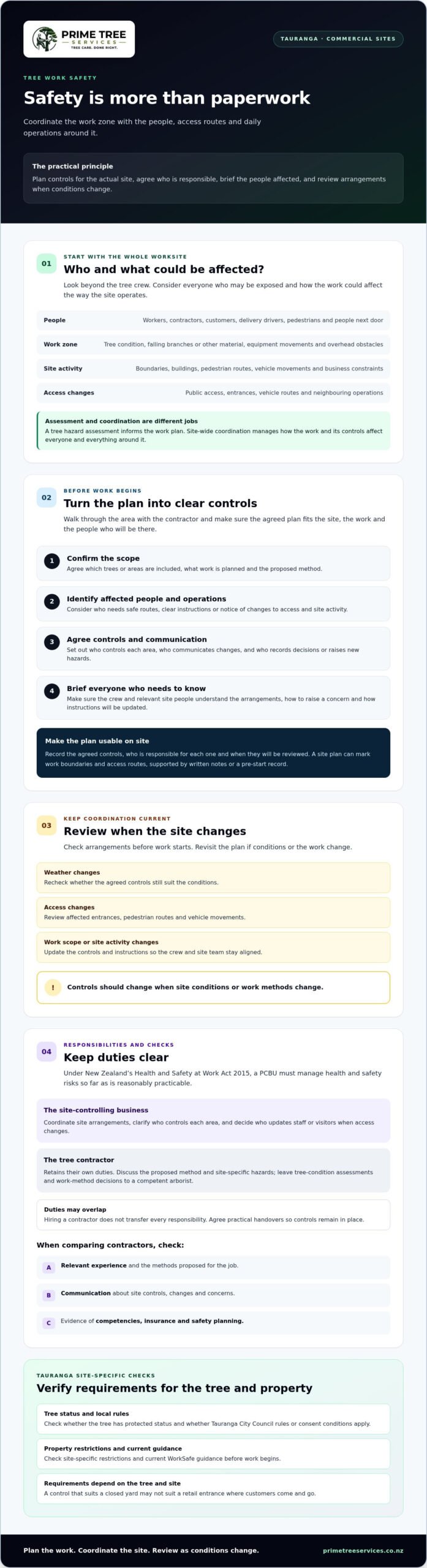
Before work starts, agree who controls each area, who tells staff or visitors about changes, and who records decisions or raises new hazards. For example, identify who will update the site team if an entrance or vehicle route needs to change. Clear handovers help keep agreed controls in place.
Why Tauranga site conditions need a job-specific plan
A plan should reflect the actual site: public access, vehicle movements, nearby buildings, boundaries and business operating hours. A control that works in a closed yard may not suit a retail entrance where customers come and go.
Check whether the tree has protected status and whether Tauranga City Council rules, consent conditions or property restrictions apply. Requirements depend on the tree and site, so verify them before work begins. If the scope also includes hedge removal, review the Tauranga hedge removal service page when discussing the planned work with your contractor.
How to assess tree-work hazards without relying on paperwork alone
A useful hazard review starts with three questions: who could be exposed, what could happen, and which site operations could be affected? Consider workers and contractors, as well as customers, delivery drivers, pedestrians and people next door. A form can record decisions, but it can’t show whether a barrier is still in place or whether a changed access route is creating risk.
What should a commercial tree-work hazard review cover?
Walk through the work area with the contractor. Check boundaries, nearby buildings, pedestrian routes, vehicle movements and business constraints. Discuss the tree’s condition, falling branches or other material, equipment movements and overhead obstacles. Ask the contractor to explain the proposed method and the site-specific hazards they’ve identified. Leave tree-condition assessments and work-method decisions to a competent arborist rather than trying to diagnose them yourself.
For commercial tree safety compliance tauranga, record the agreed controls, who’s responsible for each one and when they’ll be reviewed. Use a format suited to the job, such as a site plan marking the work boundaries and access routes, supported by written notes or a pre-start record. For industry information, consult the New Zealand Arboricultural Association.
When should the site plan be reviewed?
Check arrangements before work begins, then revisit them if the weather, access, work scope or site activity changes. Controls should change when site conditions or work methods change. Agree how workers can pause the job, raise a concern and receive updated instructions, so changes aren’t missed between the crew and site team.
If vehicle clearance is part of the work, discuss the routes and operating needs with your contractor. You can also discuss planned tree work and site conditions with Prime Tree Services when arranging tree pruning or removal.
A practical Tauranga pre-start checklist for commercial tree work
A short pre-start check turns an agreed job into controls people can follow. For commercial tree safety compliance tauranga, confirm that the written plan matches the site, the work and the people who’ll be there.
What should the business and contractor agree before work begins?
- Confirm the scope: Record which trees or areas are included, the work to be done and the agreed method. Tree felling and removal information can help clarify the service being discussed, but it isn’t proof of compliance.
- Name the contacts: Identify the site contact and contractor representative, confirm how the crew will access the property, and agree how changes or concerns will be communicated.
- Set site controls: Mark the work area, agree who manages its boundaries, and plan how staff, customers, visitors and vehicles will be kept clear. Consider deliveries, customer notices, alternate routes and essential business activity that needs to continue.
- Brief and review: Make sure affected people know what’s happening, where to go and whom to contact. Recheck the arrangements if the scope or site conditions change.
What records help demonstrate that planning took place?
Keep the site-specific plan, agreed controls, briefing records and notes of changes where relevant. Make them accessible to the site and contractor representatives who need to act on them. At body corporates and other multi-occupant properties, include how updates will reach residents, tenants or on-site staff.
Records support good practice, but they don’t guarantee compliance if the controls aren’t followed. WorkSafe’s Approved Code of Practice for Safety and Health in Arboriculture offers practical guidance; check current WorkSafe information as well. Before work starts, verify whether Tauranga City Council rules, consent conditions or protected-tree status apply to the particular tree and site.
Choosing a Tauranga tree contractor and keeping safety responsibilities clear
A suitable contractor should be able to explain how the proposed work fits your site, not just name the task. For commercial tree safety compliance tauranga, compare providers on relevant experience, a clear work scope, proposed methods, communication and safety planning. Ask for evidence of relevant competencies and insurance, then check the details rather than assuming they’re current or suitable for the job.
Questions to ask before confirming commercial tree work
- Who will supervise the work, and how will site-specific hazards and agreed controls be managed?
- How will the crew tell your site contact about delays, changed conditions or a change in scope?
- What does the quote include: which trees or work areas, access arrangements and the agreed cleanup scope?
- Who will manage the work zone and keep staff, visitors and vehicles clear?
If hedge work is part of the same site plan, review the Tauranga hedge removal service information when defining the scope. Service information can clarify the work being discussed, but it isn’t evidence of a contractor’s competence or compliance.
When to get expert guidance before work proceeds
Confirm responsibilities before the crew arrives. The contractor manages their work and communicates relevant changes, while your business may still need to coordinate people, access and operations in areas it controls. Check current WorkSafe guidance for health and safety duties, and ask Tauranga City Council about rules or consent requirements that may apply to the specific tree and site.
If the job raises complex questions about tree condition, electrical risks, legal duties or consent, pause and seek advice from the appropriate competent professional or authority. Prime Tree Services provides planned tree pruning and removal across Tauranga. Discussing the site and proposed scope can help clarify what work is being considered, without replacing your own safety checks.
Discuss planned tree work with Prime Tree Services
Plan your next tree-work project with confidence
Good commercial tree safety compliance tauranga starts with a job-specific plan, clear coordination between the business and contractor, and controls that work on the ground. Check who could be affected, agree how the work area and access will be managed, and keep records that reflect what’s actually happening on site.
Prime Tree Services provides tree removal, felling, pruning and crown reduction in Tauranga. Discussing the work scope, buildings, boundaries and site access can help clarify the tree work being planned. Your business still needs to coordinate its own site responsibilities and verify any relevant WorkSafe guidance or council requirements.
With the right conversations and checks in place, you can plan tree work more calmly around the people and operations that rely on your site every day.
Frequently Asked Questions
What does commercial tree safety compliance involve in New Zealand?
It involves planning, coordinating and reviewing controls for the tree work and the people around it, not just completing a form. For commercial tree safety compliance tauranga, consider the work scope, tree and site hazards, pedestrian and vehicle access, nearby buildings, and how the job could affect daily operations. Agree who manages each control, brief relevant people and keep records that reflect the actual arrangements.
Is a business responsible for tree contractor safety on its site?
Yes, a business may have health and safety responsibilities alongside the contractor’s duties. Under New Zealand’s Health and Safety at Work Act 2015, PCBUs must manage risks so far as is reasonably practicable. Engaging a contractor doesn’t automatically transfer the business’s responsibilities. Before work starts, agree who controls each area, communicates changes and records actions, taking account of the parts of the site each party manages.
What should a commercial tree-work site plan include?
Include the agreed work scope, site contact, work-area boundaries, access arrangements and controls for keeping workers, visitors and vehicles clear. Note nearby buildings, operating needs, communication arrangements and who is responsible for each agreed action. The contractor should explain the proposed work method and relevant hazards; tree condition and technical work decisions should be assessed by an appropriately competent professional. Record how the plan will be reviewed if conditions or the scope change.
Does hiring an arborist guarantee commercial tree safety compliance?
No. Hiring a tree contractor doesn’t guarantee that the whole site is compliant or remove the business’s own responsibilities. Check relevant experience, proposed methods, insurance and evidence of competencies, then verify the details rather than relying on assumptions. The business still needs to coordinate the areas and operations it controls, communicate with affected people and check whether site-specific restrictions or council requirements apply before work proceeds.
Is the WorkSafe arboriculture Approved Code of Practice current?
WorkSafe’s Approved Code of Practice for Safety and Health in Arboriculture remains referenced as practical guidance, but WorkSafe notes it hasn’t been fully updated to reflect the Health and Safety at Work Act 2015 and will be progressively reviewed. Check WorkSafe’s current guidance and applicable legislation before relying on it for a job. For a Tauranga site, also verify any relevant council rules or consent conditions for the particular tree and property.