A tree leaning over a roof, a hedge taking over the footpath, or a section buried under green waste can make an otherwise good property hard to use. Professional tree services Tauranga property owners can rely on are about more than cutting vegetation back. The right work makes a site safer, easier to maintain, and ready for whatever comes next – from enjoying more sunlight in the yard to preparing for landscaping, a sale, or construction.
Every property presents a different set of challenges. A small pruning job in an open backyard is very different from dismantling a large tree beside a house, working around power lines, or clearing an overgrown lifestyle block with limited access. That is why a proper on-site assessment matters before a saw is started.
What tree services Tauranga properties commonly need
Tree work is often requested when a problem has become obvious: branches are rubbing on a roof, deadwood is dropping, a canopy has blocked light, or roots and stumps are stopping a new project. In many cases, though, planned maintenance is the more cost-effective option. A well-timed prune can reduce weight in selected limbs, improve the shape of a tree, and prevent it from becoming a larger access or safety issue later.
Tree trimming, pruning, and canopy management
Good pruning is selective. It is not simply a matter of cutting everything back as hard as possible. The aim may be to remove dead, damaged, crossing, or poorly placed branches; lift lower limbs clear of driveways and paths; improve clearance from a building; or let more light into a lawn or outdoor living area.
Crown reduction can be useful where a tree has outgrown its available space. Done carefully, it reduces the canopy while retaining a balanced, natural-looking tree. Heavy, rushed topping can leave weak regrowth, an awkward shape, and more maintenance down the track. The best approach depends on the species, condition, size, location, and the result the property owner actually wants.
Tree removal and controlled felling
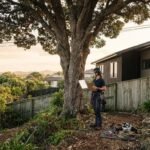
Removal is sometimes the practical answer. A tree may be dead, declining, badly positioned, storm-damaged, interfering with planned building work, or simply too large for a confined site. Removing it can create usable space, restore a view, reduce ongoing leaf litter, or deal with a genuine risk.
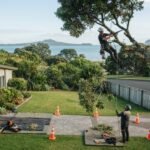
Not every tree can be felled in one piece. Where homes, fences, gardens, pools, sheds, or neighboring properties are close by, the tree may need to be dismantled in controlled sections. This takes planning, suitable equipment, clear drop zones, and a crew that understands how to protect the area below. Difficult access or sloping ground does not automatically make a job impossible, but it changes the method and the time required.
Hedge, palm, yucca, and shrub work
Overgrown hedges can quickly narrow a driveway, block windows, shade gardens, or make a boundary look untidy. Regular hedge trimming keeps growth dense and manageable, while a reduction can bring an oversized hedge back to a more practical height and width. If the hedge is no longer serving its purpose, complete removal may be the better long-term choice.
Palms and yuccas need their own approach. Dead palm fronds can be messy and hazardous, while old yucca plants often have sharp foliage and stubborn root systems. Cleaning, trimming, or removing these plants properly leaves the area safer and far easier to maintain. The same applies to unwanted shrubs that have spread into paths, lawns, fences, or building edges.
Stump grinding and vegetation clearing
A tree is not fully out of the way when the trunk has been cut at ground level. A leftover stump can be a trip hazard, an obstacle for mowing, and a barrier to new planting, paving, or construction. Stump grinding breaks the stump down below ground level so the area can be reinstated for its next use.
For neglected sections, clearing may involve more than one task: removing small trees and scrub, cutting back invasive growth, chipping green waste, grinding selected stumps, and leaving the site ready for a fence line, lawn, garden, accessway, or building project. The scope should be tailored to the plan. There is little value in clearing an area without agreeing on what stays, what goes, and how the resulting material will be managed.
The job starts before the first cut
Safe tree work is built on practical planning. Before recommending a method, a professional crew should look at the tree or vegetation condition, surrounding structures, access, ground conditions, slope, services overhead or underground, and the likely path for removing material from the site.
This assessment protects more than the tree crew. It helps prevent damage to roofs, fences, gardens, vehicles, and neighboring property. It also gives the owner a clearer picture of the work involved. A quote for a straightforward open-site prune will naturally differ from one requiring careful sectional removal over a garden or restricted access through a narrow side passage.
It is also worth considering whether permissions or specific site requirements apply before work begins. Trees near boundaries, public areas, protected locations, or utility services can require extra checks. Raising these questions early avoids a last-minute delay and helps keep the work orderly.
What a clear quote should cover
A written quote removes much of the uncertainty that comes with tree and vegetation work. It should describe the agreed scope in plain terms: which trees, hedges, stumps, or areas are included; whether the work is pruning, reduction, removal, or clearing; and what will happen to the green waste.
Green-waste handling is a key detail. Chipping can reduce a large volume of branches quickly, but customers should know whether mulch is being left on site or removed. Larger timber, palm debris, hedge cuttings, and general vegetation also need a plan. A tidy finish is not an optional extra after a tough job. It is part of handing the property back in a condition the owner can use.
Price should reflect the work required, not just the height of a tree. Access, hazards, disposal, equipment needs, cleanup, and the amount of controlled cutting all affect the cost. A very cheap figure can leave important questions unanswered, particularly if it does not clearly include waste removal or site cleanup.
When it is time to call a professional
Basic garden maintenance is within reach for many property owners. But some jobs are better left to an experienced crew, especially when there is height, weight, decay, difficult access, or a consequence if something lands in the wrong place. Call for an assessment when you notice several of these signs:
- Dead, cracked, hanging, or storm-damaged branches
- A tree growing too close to a roof, power service, driveway, or neighboring property
- A canopy that has become too heavy, dense, or unbalanced
- An overgrown hedge that cannot be safely reached from the ground
- A stump, palm, yucca, or dense scrub area preventing work on the property
Trying to solve these problems with a ladder, a small domestic saw, or an improvised drop zone can turn a manageable job into property damage or injury. The goal is controlled work, not a dramatic finish.
A straightforward process for a better site
Prime Tree Services approaches each job as a complete property-management task. It begins with an on-site assessment and practical recommendations based on what is growing, where it is growing, and what the customer needs from the space. From there, the owner receives a clear written quote and knows what work is proposed before the crew arrives.
On the day, the work area is planned around access and protection for nearby features. Trees and vegetation are cut, lowered, trimmed, chipped, removed, or ground as agreed. Once the main work is finished, the crew manages the green waste required by the quote and completes a thorough cleanup, followed by a final customer check.
For owners across Tauranga, Mount Maunganui, Papamoa, Bethlehem, Te Puna, Omokoroa, Te Puke, and surrounding Bay of Plenty areas, the practical next step is simple: walk the site with someone who can assess the whole job. A clear plan at the start is the best way to end up with a safer, cleaner, more usable property.